Website Disclaimer October 2024

Important Legal Information & Terms of Use

By using the Cape Capital website (“Website”), you declare that:

  • You are a qualified investor according to Art. 10 para.3 of the Swiss Collective Investment Scheme Act (CISA) and/or a professional or institutional investor according to Art. 4 of the Financial Services Act (FinSA).
  • You are domiciled in Switzerland
  • You have understood and agree to the following Important Legal Information and Terms of Use (together “Conditions”)

By clicking “Accept all” you acknowledge and accept the following Important Legal Information and Terms of Use:

About this Website

Cape Capital is an independent wealth manager headquartered in Zurich, Switzerland.

The content of this Website (including microsites) has been prepared by Cape Capital AG, with its registered address at Utoquai 55, 8008 Zurich, Switzerland (“Cape Capital”), duly registered at the commercial register of the Canton of Zurich with number CHE-109.617.147. and contains the views and opinions of the particular individuals and is for general information and marketing purposes only. All copyrights and other rights, included but not limited to logos and registered trademarks relating to the entire content of the Website are reserved exclusively to Cape Capital or the specifically designated right holders. Any use, in particular the reproduction or publication in full or in part is permitted only with the prior written consent of Cape Capital. Cape Capital may from time to time suspend the operation of this Website for repair, maintenance or improvement work, or in order to update or upgrade its content or functionality. Cape Capital may also change the format, content and/or access of this Website at any time at its sole discretion without notice. Although Cape Capital believes that information provided on this Website is based on reliable sources, content on this Website is presented only as of the date published or indicated, and may be superseded by subsequent market events or for other reasons. Therefore Cape Capital cannot assume responsibility for the quality, correctness, timeliness or completeness of the information contained herein. Unless otherwise stated, the numbers/figures on the Website are unaudited.


Regulatory Status & Ombudsman

Cape Capital is a regulated asset manager of collective assets according to the Federal Act on Financial Institutions of 15 June 2018 (FinIA) and supervised by the Swiss Financial Market Supervisory Authority FINMA, Laupenstrasse 27, CH-3003 Bern, Switzerland (FINMA). The Website contains information about various collective investments (“Funds”) which may have been registered or otherwise notified for distribution and marketing in the jurisdiction you have selected. Please note, that such registration or notification does not mean that the Funds are suitable for all investors and their investment objectives, financial situation and risk profile. As an asset manager of collective assets, Cape Capital is, among others, subject to the rules under the Swiss Financial Services Act (FinSA), the Swiss Collective Investment Schemes Act (CISA) and the Swiss Financial Institutions Act (FinIA).Cape Capital is affiliated to the following Ombudsman according to FinSA: Finanzombudsstelle Schweiz (FINOS), Talstrasse 20, CH-8001 Zurich, Switzerland. For further information, please refer to the General Client Information Document available on the Website which forms an integral part of these Conditions. Cape Capital is an independent wealth manager headquartered in Zurich, Switzerland.


No Solicitation, Offer, Recommendation or Advice

Nothing contained on this Website constitutes a solicitation, an offer or a recommendation to buy or sell any Cape Capital Funds or other financial instruments, nor does it constitute any form of personal investment advice which takes into account your personal circumstances. Cape Capital does not provide investment, legal, tax or other advice through this Website and nothing herein should be construed as such advice. Cape Capital does not represent that any Cape Capital collective assets or financial instruments mentioned on this Cape Capital website are suitable for any investor. Investment or other decisions should be made solely on the basis of the relevant product and/or service documents (prospectus/offering memorandum, fund contract/articles, key information documents, financial reports) of the respective collective investment. If not a Cape Capital client, it is strongly recommended to contact a professional financial advisor, tax consultant or other qualified expert in order to determine whether an investment in a Fund or other financial instrument corresponds to the specific requirements and preferred level of risk of the investor.


US Persons

Any collective investment schemes mentioned on this Website may, unless explicitly stated otherwise, not be offered, sold or delivered to United States (U.S.) citizens or persons resident or incorporated in the U.S. and/or other natural or legal persons whose income and/or returns, regardless of origin, are subject to U.S. income tax, as well as persons who are considered to be U.S. persons pursuant to Regulation S of the U.S. Securities Act of 1933 and/or the U.S. Commodity Exchange Act, in each case as amended from time to time.


Risk Considerations

The provision of financial services and investments in Funds and other financial instruments involve opportunities but also bear risks, including the risk that the value of investments and the income therefrom may fall or rise and investors may not get back the full amount invested or may even lose all of their investment. Investors should ensure to have fully understood such risks before taking any investment decisions. Cape Capital strongly advises to consult the brochure “Risks Involved in Trading Financial Instruments” of the Swiss Bankers Association (SBA) as well as  the relevant documents of the respective Fund or financial instrument and to seek professional investment advice before taking any decision to invest. Investors should note, that these Conditions do not represent a complete statement of risks associated to a Fund or a financial instrument. Past performance is no indication of current or future performance. Performance data do not include commissions and costs incurred by investors when subscribing or redeeming Fund shares.Investments, in particular collective investments in private equity, venture capital and other illiquid assets involve an above-average degree of risk, including the risk that losses may even exceed the original investment and should be seen as long-term in nature.


No Warranties

The use of this Website, including any information accessed, downloaded or otherwise obtained through the Website is at your own risk. This Website, together with all content, information and materials contained therein, is provided “as is” and “as available”, without any representations or warranties of any kind, whether express or implied, with respect to the Website, and all information and functionalities contained therein.


Limitations of Liability

IN NO EVENT SHALL CAPE CAPITAL BE LIABLE FOR ANY DIRECT, INDIRECT, INCIDENTAL, SPECIAL, PUNITIVE, CONSEQUENTIAL OR OTHER DAMAGES (INCLUDING WITHOUT LIMITATION DAMAGES FOR LOSS OF DATA, BUSINESS OR PROFITS) ARISING OUT OF OR IN CONNECTION WITH THESE CONDITIONS, THIS WEBSITE, THE INABILITY TO USE THIS WEBSITE OR ANY INFORMATION OBTAINED OR STORED THERFROM. Cape Capital excludes any liability for any loss, damage or alteration of any kind including but not limited to transmission to losses, delays, misunderstandings, unauthorized interception by third parties, duplication or fraud, except in the event of gross negligence on the part of Cape Capital. Any transmission or download of information is entirely at your own risk.


Use of Links

The hyperlinks on the Website are only provided for information and convenience purposes. Cape Capital is not responsible for the content of external websites that link or are accessible from this Website. Cape Capital does not assume any responsibility or liability with respect to any website accessed via this Website. Please note that when you click on any external website’s hypertext link you will leave this Website. You should review the privacy statements of such websites carefully before you provide any personal or confidential information.


Electronic Communication Channels

The use of electronic communication channels, in particular unencrypted e-mails and text messages, is associated with various risks which may include, but are not limited to, the risk of transmission errors, alterations or duplications, the risk of interception or manipulation of content and the risk of introducing malicious software (malware) by unauthorized third parties. By using such electronic communication channels, you accept these risks and agree to bear any resulting losses or damages.

Data Protection and Privacy Settings

Cape Capital has established a Cape Capital Privacy Notice, which forms an integral part of these Conditions. It explains how personal data is collected and processed at Cape Capital, including this Website. Cape Capital uses cookies to personalize and improve site experience. You can at any time change or withdraw your consent from the Cookie Declaration on the Website. Your consent applies to the following domains: capecapital.com. Your current state: Consent accepted or Consent rejected. Manage your consent.


Applicable Law and Jurisdiction

The access and use of this Website, and these present Conditions are governed by substantive Swiss law with the exclusion of the conflict of law principles. The place of jurisdiction is Zurich, Switzerland.

Last Update: October 2024

Your preference will be securely stored for the next 30 days.

DeclineAccept All

To access the website, the terms and conditions need to be accepted.

View terms
Preferences

This Cookie Policy explains what cookies are and how we use them, the types of cookies we use i.e, the information we collect using cookies and how that information is used, and how to control the cookie preferences. For further information on how we use, store, and keep your personal data secure, see our Privacy Policy. You can at any time change or withdraw your consent from the Cookie Declaration on our websiteLearn more about who we are, how you can contact us, and how we process personal data in our Privacy Policy.Your consent applies to the following domains: capecapital.com

Accept all cookies
Thank you! Your submission has been received!
Oops! Something went wrong while submitting the form.

The new age spread: a model for collaboration and empowerment

FOLIO Edition VIII: SPREADS
Business & Markets

Cape founder and CEO Alex Vukajlovic on why work culture matters – and the employee pairings that play to individual strengths.

From day one of Cape Capital, the culture of the organisation was imperative to our business model. I have always believed that it is important in how you grow a company and how purposeful you are over time. Of course, at the beginning, in 2002, it was relatively easy because we had fewer employees. Today, we are 40 plus people. We’ve tried to keep a relatively flat structure but inevitably there is departmentalisation and more effort is needed to retain the same spirit of culture. 

What I’ve learnt in the last 24 years of managing teams is that one of the biggest problems for a small company is hiring those at the mid-level of their career. These individuals are typically aged 30 to 50 and at the peak of their power and ambition, in a position where they want to maximise their own personal standing, income and CV. Many of them have worked in hierarchical organisations where they must push and be political to get ahead. Acting in this way becomes a muscle memory but it’s incompatible with a company like Cape, which really cares about culture. 

In the Swiss financial industry, historically, the age of 50 has been a tipping point. By then, someone has risen through the ranks. They are earning more money, have a better title, and a number of perks. But often that individual has drifted away from their core competence, moved into managing people and processes, whilst becoming  way more expensive. Suddenly senior management realises there is someone younger on the team who can deliver the same role for a fraction of the cost. The 50-year-old is out of a job but doesn’t want to sit around in the South of France or Spain playing chess: they’ve still got more to give. 

At Cape, what we offer those selected few is a second career. We might not pay them what they were earning before, but we enable passionate professionals to get back to doing the job they once loved in a stimulating environment, without politics, with no retirement age and flexibility on how many days they work. 

At the other end of the ladder are graduates who leave university with high expectations. If they land a job in a large organisation run like a machine, they are often disappointed. For anyone without strong elbows, it can be hard to succeed. They are technically fresh and good with software but lack experience – both in their subject matter and in dealing with people. The environment they start their career in will define their character and working DNA.

For us, the client comes first, the organisation second, and personal interests then follow.

For the last eight years or so, where possible, at Cape we have paired both groups – those just starting out with top level specialists. The younger generation brings an energy and a naivety; the older generation brings expertise. One advantage is that they’re not competing for each other’s jobs. Another factor to consider as one of the reasons clients come to us, is the longevity of the relationship. It’s like going to the doctor when you’ve stripped naked and revealed personal details about yourself: no-one likes to then have to change doctor and repeat the process. Similarly, when someone is sharing information about their finances in confidence, they don’t want their wealth manager to leave. For us, the client comes first, the organisation second, and personal interests then follow. We’re there to understand someone’s issues, create a connection and provide solutions. Those at the senior end of their employment are incredibly loyal for longer than even they anticipate and they are supported by a younger counterpart.

As I was writing this article, I spoke to one such working partnership, William Raynar, our Thematic Research Advisor, and Oscar Puype, an intern, about their impressions of the culture at Cape. “Even before I joined Cape, I saw it as very agile, and since I arrived in 2024, I don’t think I’ve ever had a ‘no’ in terms of resources or ideas,” said William. “The business is always looking for those who think outside the box and where they excel, and therefore as an employee, you feel valued. I’m a lateral, top-down helicopter thinker and Oscar brings my ideas together by looking at the micro details, in a way that makes them consumable by the team and, most importantly, by clients.”
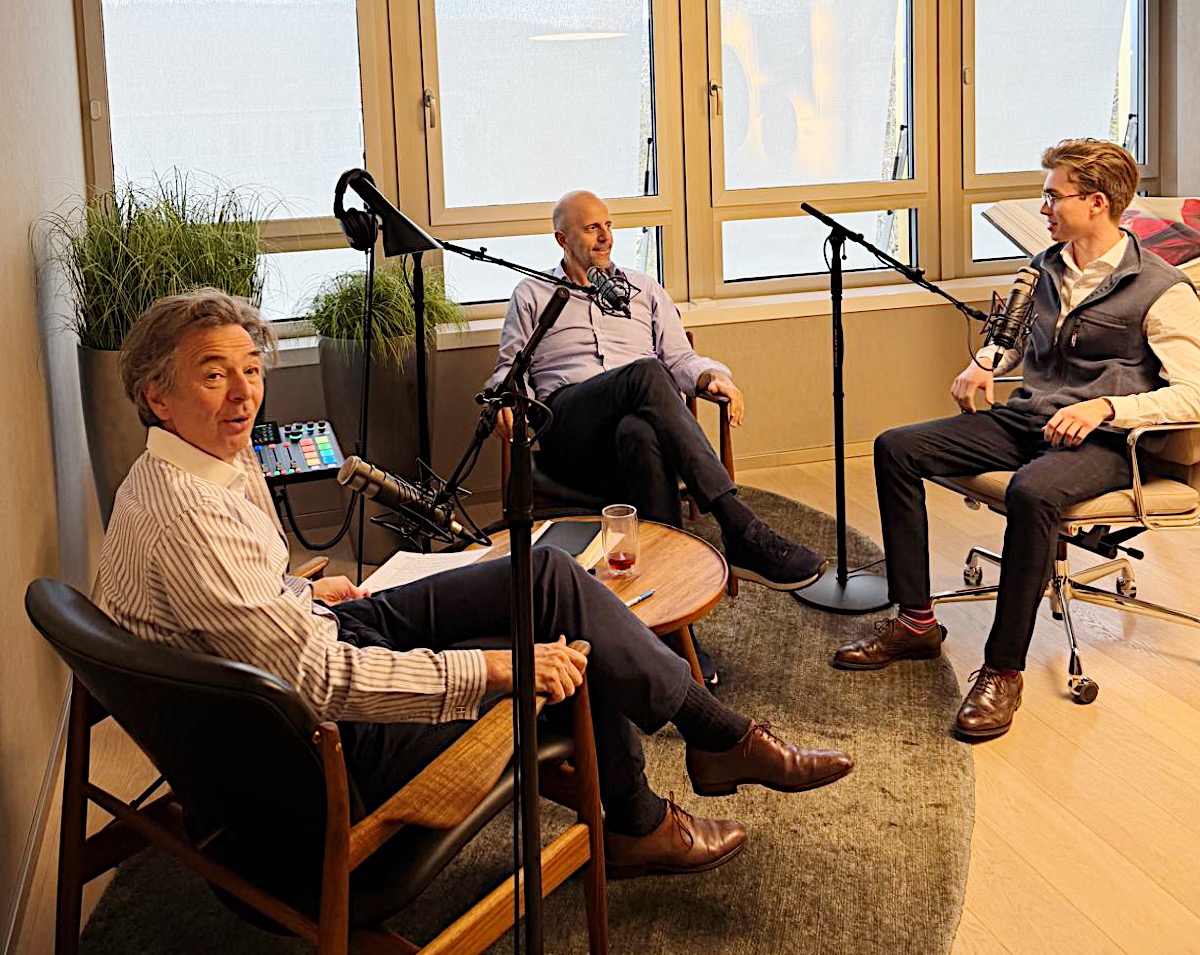
Alex, William and Oscar recording a Cape Compass on the new age spread 

According to Oscar, having the opportunity to work with someone older brings a multitude of benefits. “Being able to have one-on-one time with someone who is as experienced as William is the best thing a new university graduate can ask for. What’s been great is that I have my monthly deliverables, but I can venture out and work on additional projects: now my work with William is around 60 per cent of my workload and I’ve been given so much more responsibility that I’m certain I wouldn’t have been in another organisation,” he told me.

From a social duty perspective, the world of AI has only confirmed in my mind the need for even more of this type of pairing. The younger generation is most vulnerable to the implementation of agents like Claude who can complete tasks quicker – and post-university unemployment numbers are skyrocketing. For instance, in February it was reported by job-matching platform Adzuna that youth employment, age 16-24 in the UK has climbed to 16.1 per cent (in London to 25 per cent) – the highest level in over a decade – while graduate vacancies have fallen by 45 per cent over the past year. The company suggested that these figures were in response, not only to higher payroll taxes and minimum wage rises, but also to the expanding capabilities of AI tools. 

Combining a senior brain with the agility and skillset of a young person who is a digital native is the sweet spot.

It’s a paradox because, of course, the younger generation are the savviest when it comes to using computers. Empowering the team is the key in organisational developments; something that has never been easier thanks to AI, as mistakes are cheap and easily corrected. But while the execution cost of intelligence is dropping massively, what matters more is real life experience and the intangible elements of relationships. We are a small organisation but by actively employing the young, we hope to set an example. 

We are also in a situation now where graduates are choosing our internship scheme over bigger institutions because they’ve heard about our culture, and the way that we operate. For us, internships are a way of observing someone: their personality, their attention to detail, whether they have what we need to hire them in the future. Where the age partnership comes in is that in operating agents like Claude, it helps to have life experience: you need a chief architect who understands Excel models and systems and the dynamics of data. Combining a senior brain with the agility and skillset of a young person who is a digital native is the sweet spot. As Cape has evolved into a new technological sequence, we’ve seen the impact of these pairings mature incredibly well. Our future at Cape is defined by collaboration and empowerment. Collaboration of experience and curiosity, and one generation empowering another. 

Listen to William, Oscar and Alex talk more in depth on this topic in our latest Cape Compass episode here

In this article
Written by