


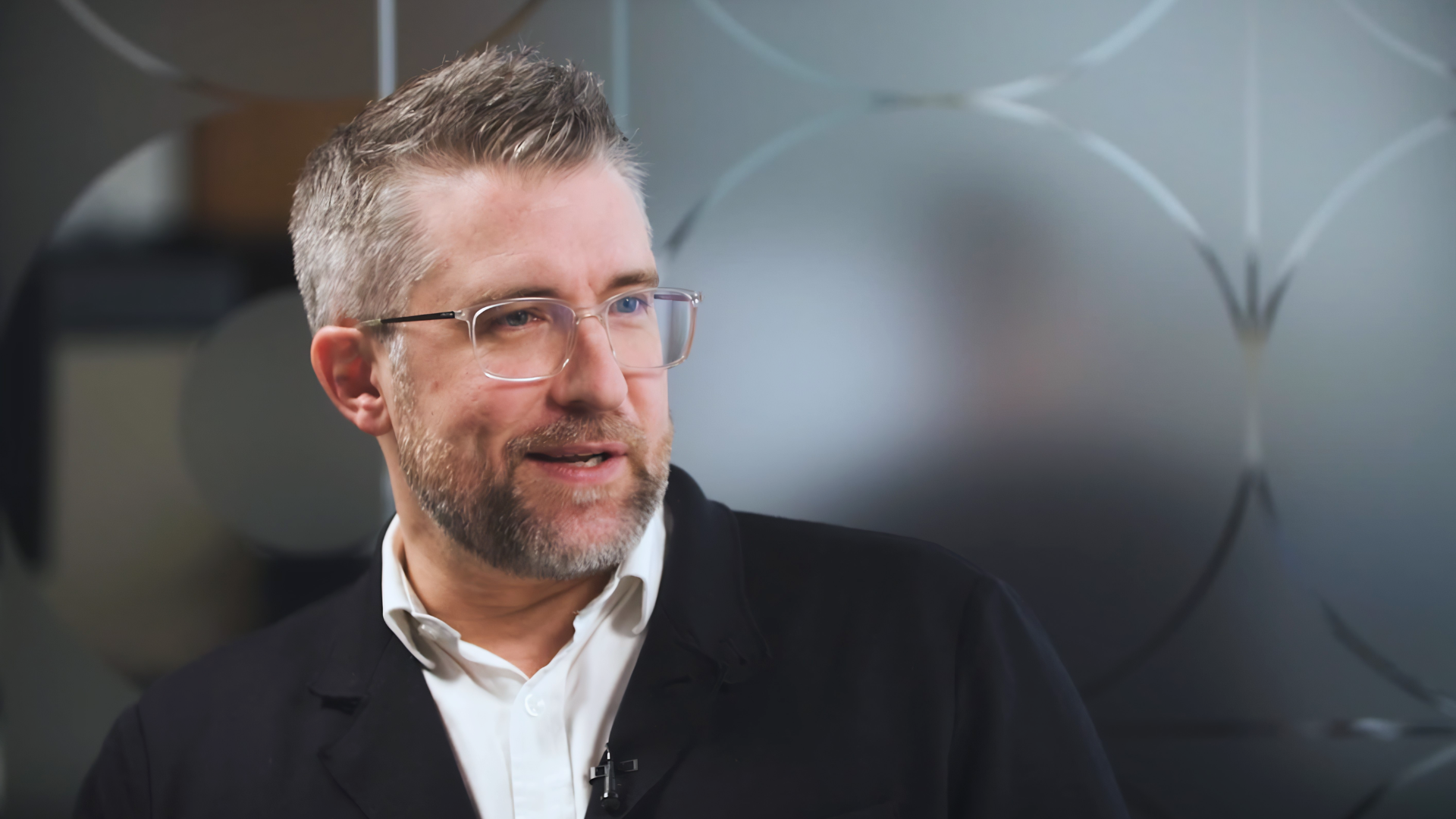
Recent Cape Converationalist Alastair Moore on generative AI and machine learning.
What does Watrfall, a first-of-its-kind platform that aims to democratise the financing of Hollywood films, and Courtsdesk, a groundbreaking digital web portal that supplies legal proceedings information to the media, have in common? On the surface, very little. But for Alastair Moore who works at the frontier of generative AI (and is involved in both companies), problem-solving technologies are the thread that ties them together. “The two umbrellas of AI and Web3 are the glue,” he confirms. “With these technologies, there is process optimisation and process innovation, where efficiency doesn’t just make an existing system better, it enables something new to become possible.”
The Building Blocks, a business Alastair co-founded in 2022 which blends blockchain, AI, machine learning and design, to support Web3 ventures, is an investor of Watrfall, which allows fans and creators to share in film profits. “One of the reasons a platform like Watrfall has never existed before is the effort involved in dealing with hundreds of shares, but technologies mean that the margin structure of administering that system of value exchange becomes cheap,” he explains, also citing one of the UK’s fastest growing fintechs, Monument Bank, as an example of leading Web3 innovation.
Prior to Courtsdesk Alastair's first foray into legal technology was as part of the founding team of We Are Pop Up, a short-term real estate platform that provided the first automated lease contracts in the UK with the aim of improving shop vacancy rates. This was followed by five years spent setting up machine learning systems at leading litigation firm Mishcon de Reya, which covered everything from measuring how lawyers spend their time to modelling outcomes of cases. “I thought then, and I still think now, that automating various bits of the legal process is important. System one runs on paper and vellum; system two will run in code,” he says.
It became clear to me that lots of white-collar work would start to be partially automated, while still having a human as part of the decision-making process.
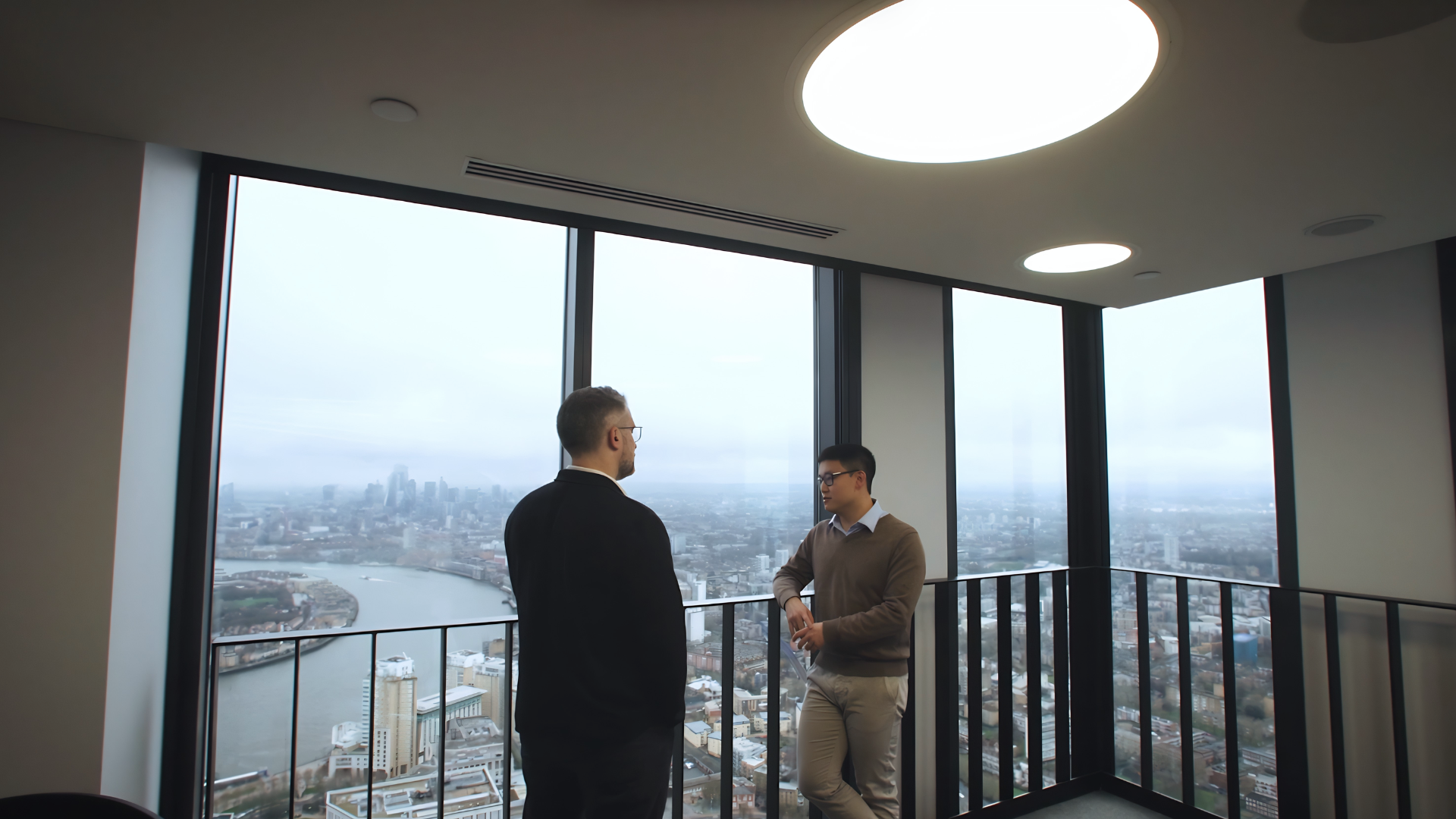
The self-labelled serial entrepreneur – who is one of a small global cohort who sits between silos, and co-founder and Chief Science Officer of AI transformation company DeepFlow – recently sat down with Tian Xia, Cape’s Technology Investment Lead, for a Cape Conversation about the status of AI applications and the advancement of machine learning. A huge technologies shift, Alastair recalls, was in 2020, when text processing in NLP (Natural Language Processing) models changed. “We had these LLM (large language models) come along and do stuff that seemed impossible before. It became clear to me that lots of white-collar work would start to be partially automated, while still having a human as part of the decision-making process. That’s where the idea for DeepFlow came from.”
Some of Alastair’s enterprises, particularly on the innovation side, can last for years; others resolve an issue at a specific moment in time. He co-founded his first venture Satalia (the name stands for SAT algorithms and 'other things') in 2008 while completing his PHD in computer vision at University College London and taking part in a New Venture Development programme at the London Business School. “The idea was to take SATtisfiability algorithms and apply them to business problems for a series of clients,” he recalls, listing Tesco supermarkets as one of the biggest.
Having become one of the UK’s fastest growing tech companies, especially known for two products: Satalia Workforce (which allocates people to their work) and Satalia Delivery (optimising the routes of vehicle fleets), it was acquired by WPP for a rumoured £75 million in 2021. “It’s always a bit weird when you build something and it goes out into the world and has a life of its own,” he reflects.
Alastair, who has always worked on multiple projects in parallel, was also one of the early adopters of mining crypto, which happened by accident when funding from a research grant became unexpectedly available in 2010. “We had been trying to use SAT algorithms for various problems, including solving a cipher, which it transpired was linked to the military. We had to desist this line of research and suddenly had six months of funding remaining. One professor suggested exploring this thing called "electronic cash" –which is where Web3 comes in as it allows you to codify digital ownership properly for the first time. It is also becoming more important as the need to embed governance as systems grow. The Building Blocks is investing in these kinds of data technologies.”
We’re sitting in the middle of two industrial revolutions at the same time: one is around intelligence; the other is around biological programming.
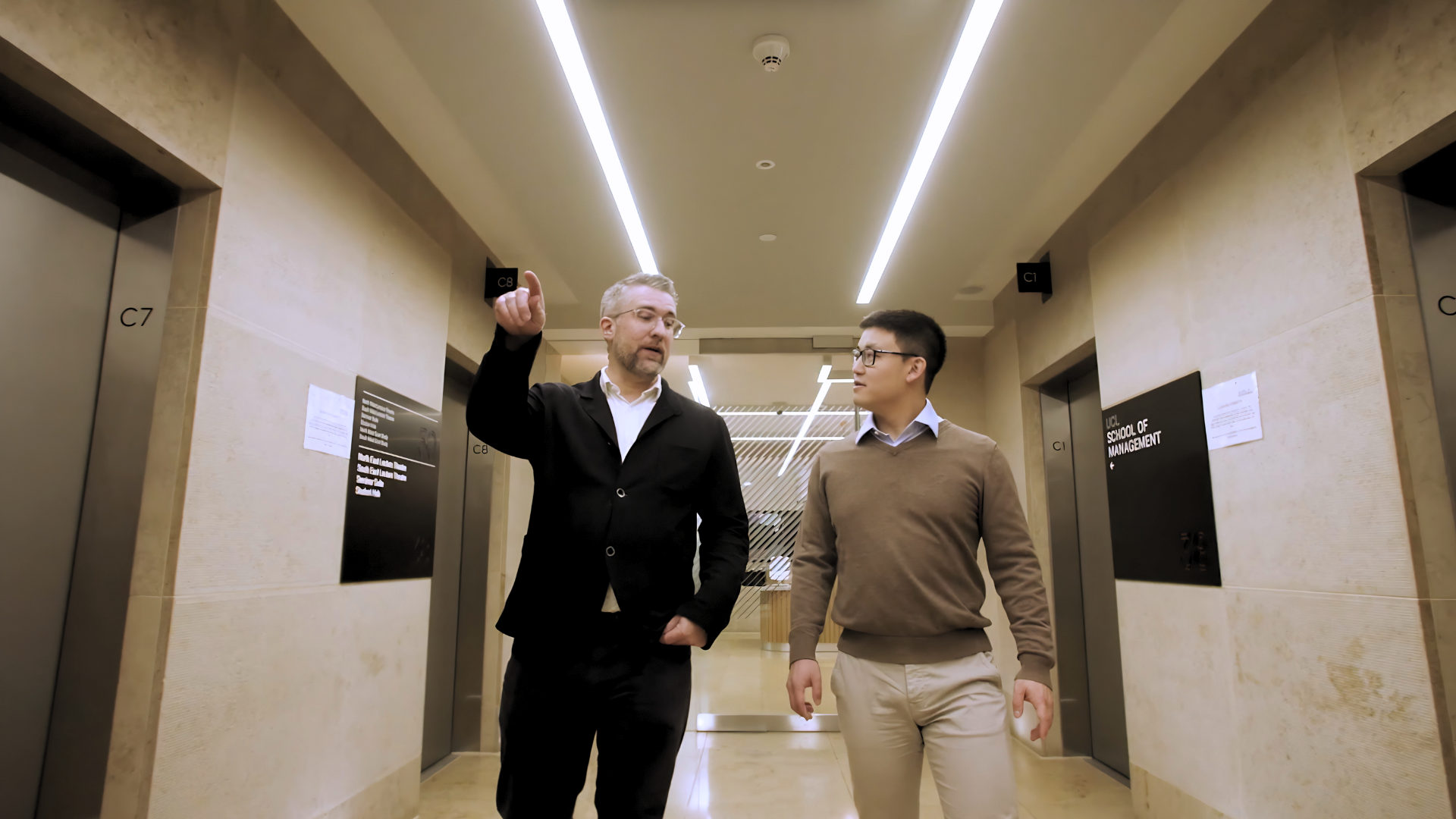
Alongside The Building Blocks and DeepFlow, Alastair is a lecturer on the Business Analytics master’s programme, which he set up at the UCL School of Management a decade ago (in that time it has grown from 30 to 170 students a year). “Teaching forces you to keep up to date with a world that is constantly changing,” he says. “We’re at the beginning of a transition into a post-labour economy and there are so many areas I would like to work on – space, farming, transport – but there just aren’t enough hours in the day.”
He believes that all three industries namechecked are interlinked. “Science papers have shown that, very crudely, there is a relationship between energy and intelligence. Building intelligence into systems means we’re going to need more energy, and our earth-based systems probably won’t be able to support that. So, we’ll have to move into space-based energy within the next decade,” he predicts. “We’re sitting in the middle of two industrial revolutions at the same time: one is around intelligence; the other is synthetic biology. With intelligence, we will build better systems so the food supply chain will get reimagined, and the space supply chain will get reimagined. Intelligence is the enabler for lots of these things and the frontier is changing rapidly.”
Alastair recently featured in a Cape Conversation with Tian Xia. You can view the film here.
Alastair Moore
Cape Capital