


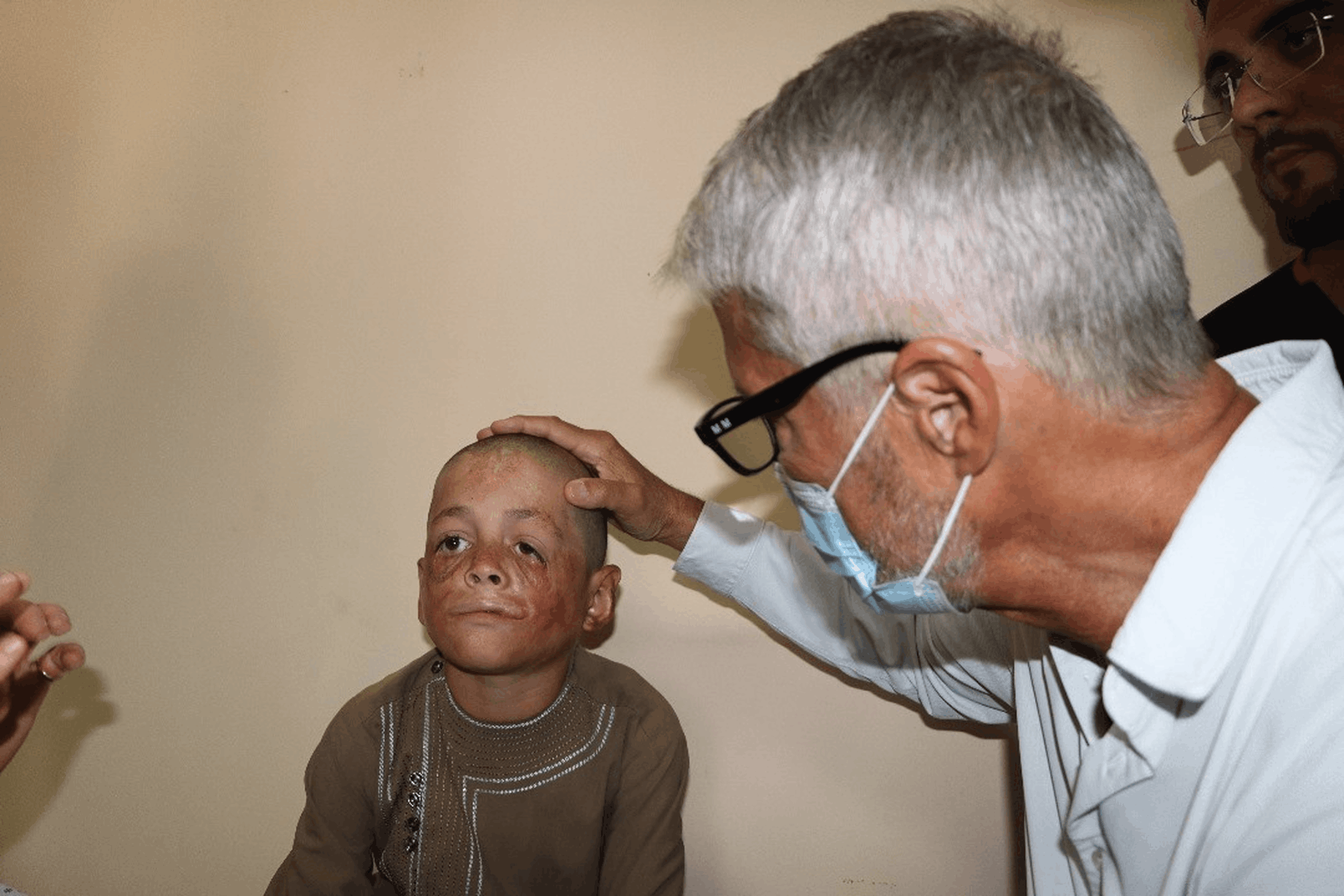
When he’s not treating patients at his exclusive Zurich clinic, cosmetic and reconstructive surgeon Dr Enrique Steiger oversees humanitarian missions in conflict zones. He tells us about spreading his time across two vastly different worlds.
For Swiss plastic surgeon Dr Enrique Steiger, a Red Cross mission to Rwanda during the 1998 genocide proved a life changing experience. “I was one of only a few on-the-ground witnesses to the massacre, while the rest of the world stayed on the outside watching,” recalls the reconstructive and cosmetic surgery specialist, of the horrors he saw. That was only his second stint in a conflict zone – the first was a UN mission with the Swiss military almost a decade earlier where he commanded a 200-strong medical team in Angola – and since then he has worked in over 20 regions of combat including Afghanistan, Kurdistan, Syria and Gaza.
To say it’s a contrast to how Enrique spends the rest of his time is an understatement. Based predominantly at the Utoquai clinic in Zurich which he founded 25 years ago (although he also works in Los Angeles and St Moritz), he treats the rich and famous who fly in for everything from face lifts to botox. “Wealthy patients pay to help the poor and abandoned,” he explains, referring to the not-for-profit Swisscross foundation he set up in 2012. “Both worlds are interconnected and I’m the bridge between the two. When patients come to me in Switzerland and say they’ve seen a documentary about my foundation’s work, they sometimes feel embarrassed asking me to fill their wrinkles. But if they don’t come back, we cannot finance our missions. Twenty percent of my net income goes into the foundation, and almost all our big donors have been patients at some point.”

Swisscross is in the one percent of NGOs not dependent on government or international aid and today the team completes around five missions a year in each country they are operating in. As well as treating patients, their main focus is to train local surgeons and nurses. The foundation was the first NGO to be invited to work under the Taliban in Afghanistan, returning after Covid to help rebuild the reconstructive surgery part of the healthcare system with private donor funding. “We always go at the request of a host government,” confirms Enrique, who started his career as a general and trauma surgeon at the University Hospital in Zurich, before working under the late Bruce Connell in California and Prof. Ivo Pitanguy in Brazil (at the time, two of the best plastic surgeons in the industry).
One of the few talents that I have is that I do not panic very easily, even if someone is pointing a gun to my head and asking me to kneel on the ground
Three years ago, UAE Aid supported a Swisscross mission in Kurdistan with a 1.2 million USD donation for a healthcare project, offering orthopaedic and reconstructive surgery to women and children refugees from the Syria war. “We have already trained more than 10 promising surgeons, and the idea is that they will be able to take over and run it themselves in about three to five years. The government has been so impressed with what we’re doing that they have committed to funding for the next decade,” says Enrique.
Over the years, there have been many life-threatening moments, particularly at checkpoints but, he says: “one of the few talents that I have is that I do not panic very easily, even if someone is pointing a gun to my head and asking me to kneel on the ground. I keep calm because my first thoughts are always making sure that nobody on my team gets hurt.” He recalls one incident in Monrovia, Liberia, when he was stopped at a gas station. “It was urban warfare and everyone was fighting for water, food and gasoline. Some people wanted to kill us for our gasoline but once I told them that I was the only doctor within 1000 miles capable of treating their families in the hospital, they let us move on.”
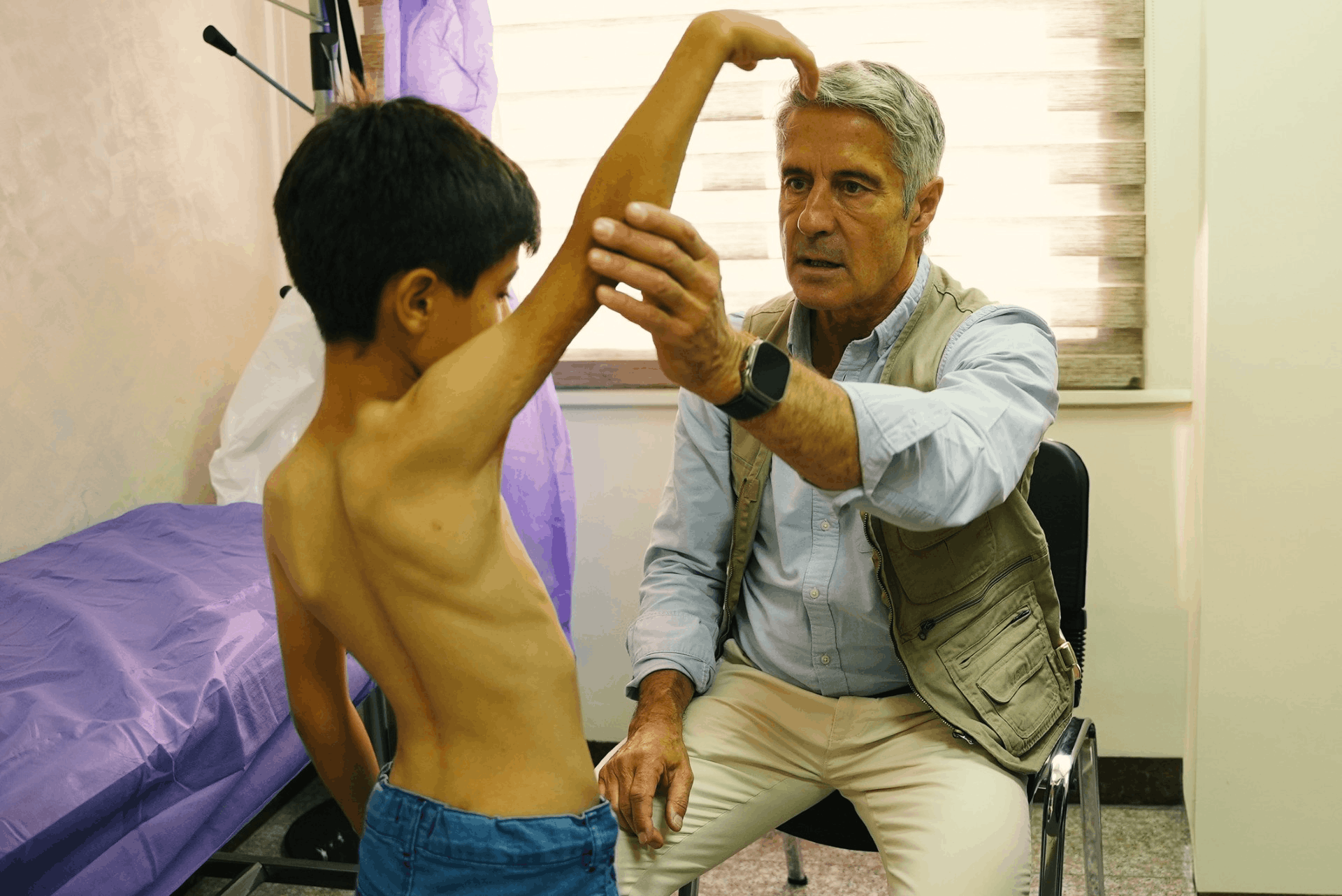
However, as evidenced in the Gaza conflict, where Swisscross surgeons were working until recently, the rules of warfare have changed. “For humanitarians in the middle of it all, it's a very dangerous game. I remember when I started, I would contact every rebel group on the ground to tell them what we were doing and why we were there,” Enrique says. “They respected the rule of law and the Red Cross Movement. Nowadays, that is all gone. If you’re a humanitarian target, then it's political; someone wants to cut the healthcare supply to their enemies.”
Why does he keep returning? “I would love to stop going to these conflict zones. To spend more time playing golf – I’m still a beginner and my wife is 10 times better than I am – but globally we are around 30,000 surgeons short for missions like ours. If we don’t go, then nobody does.” This year, he is busier than ever, not just overseeing Swisscross and juggling a lengthy patient list but also launching a new health extension programme called UTOLife. “The idea stemmed from a skydiving accident I had in California about six years ago. I broke my collarbone and a few ribs but also the X-rays showed that I had the beginning of clots in the arteries,” he says.
It's up to a country and its people if they want change. Foreign intervention has only brought disaster and misery
In response, he decided to do some research and realised that by making simple alterations to his lifestyle (more sleep and exercise, less food), he could stop it happening. “Now, I would say that I have more energy than I had 10 years ago,” he says. “One thing that has always been missing at the clinic for the holistic circle to close is health and nutrition so that is what we will offer.” The programme is kicking off this spring with around 20 patients who will undergo all kinds of tests, from visceral fats and bloods to bone density and hormonal changes. Regular monitoring and an epigenetic clock will measure outcomes and improvements over a year. “I don't like the word longevity. I'm not interested in a long life; I'm interested in a healthy life. If you're healthy, you live longer. We will collect data scientifically and see if what worked for me also works for the patients,” he says. “Medicine 2.0 is doctors healing and treating patients; medicine 3.0 is preventing diseases through a personalised plan. If we know where weaknesses are, we know exactly what’s needed.”
In the long term, he sees this approach as being viable for more than the wealthy few. A future where he will be able to apply what he learns at the clinic to improve life for those in conflict zones. “Hopefully this programme will give us new ways of thinking about how we can help a refugee camp struggling with diseases such as cholera,” he says. Politically, Swisscross remains neutral, impartial and independent – something which is crucial in the foundation being able to continue its work. “It's up to a country and its people if they want change. Foreign intervention has only brought disaster and misery. We adapt, of course, and not everything we like, but it's not up to us,” he concludes. “Our focus is on the patients, and they're very grateful that we’re there.”
Find out more about Swisscross here
Dr Enrique Steiger
Cape Capital