


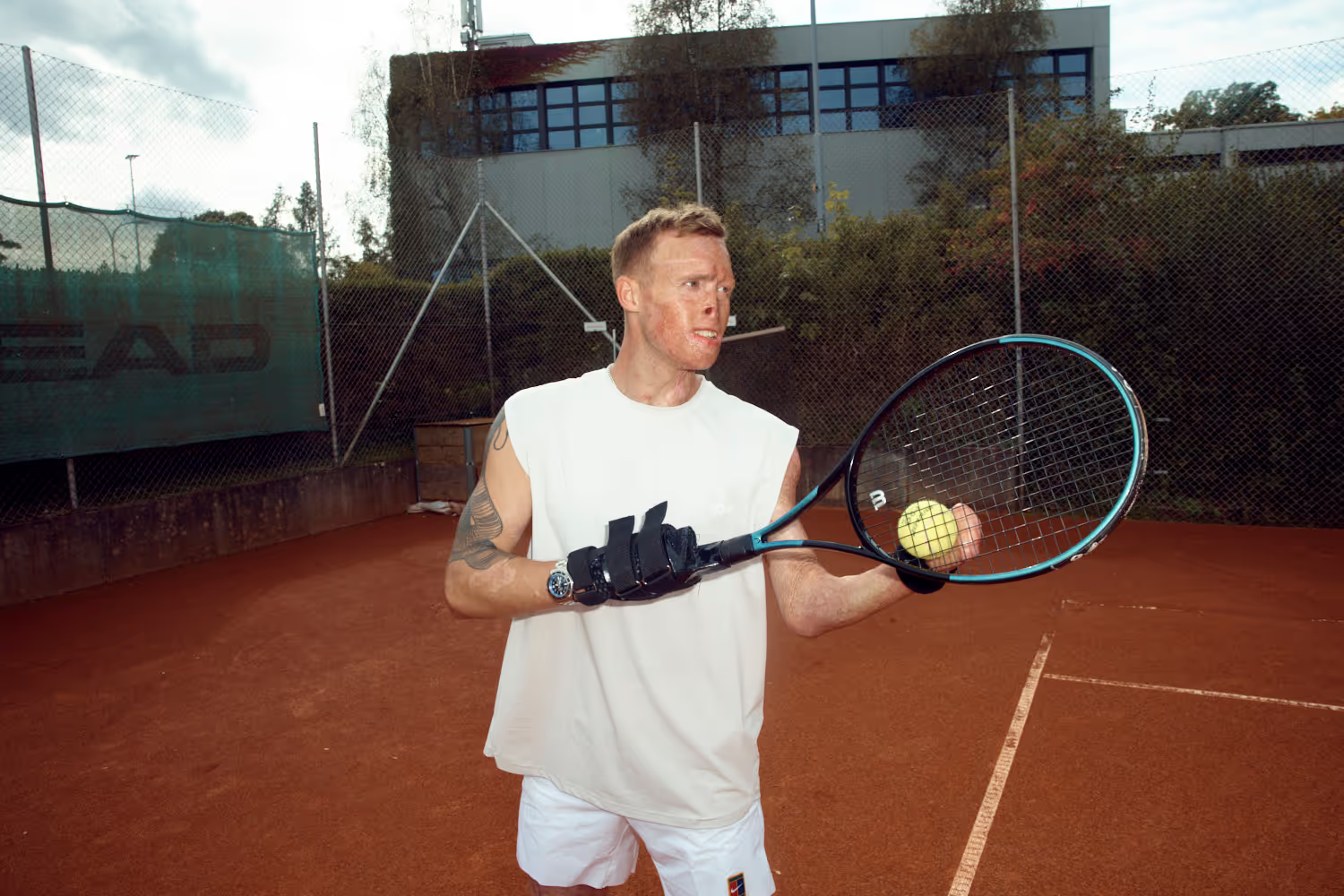
David Heimer was Head Chef at Zurich’s Josef restaurant until a life-changing accident two years ago. Here, he shares his inspiring story of recovery, inner strength and why giving up was never an option
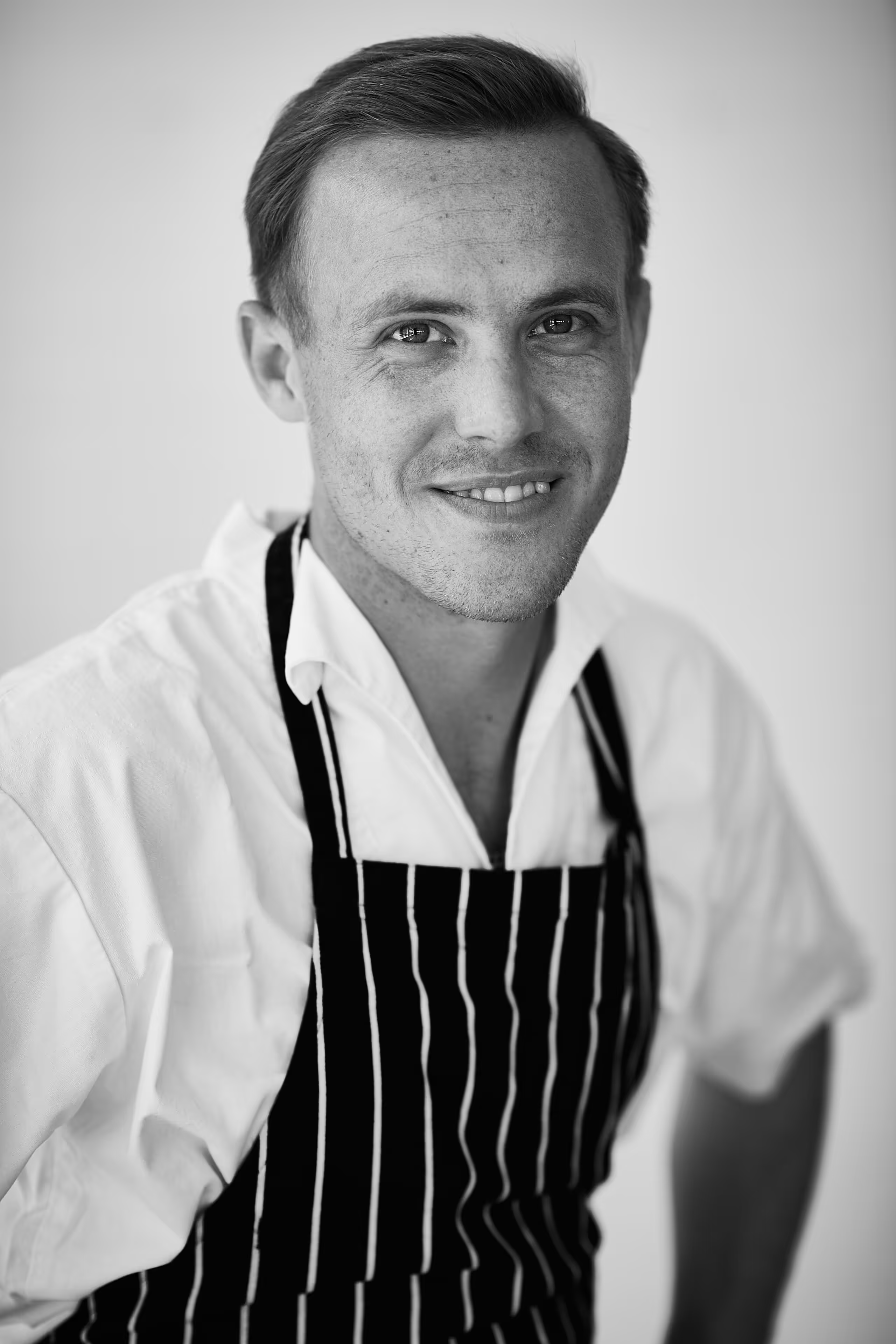
I’ve always struggled with food that focuses too much on appearance; the real value of a dish lies in its soul. For me, this mirrors life: authenticity and depth create true meaning, not perfection. I’ve worked in professional kitchens since I was 13 and my most recent job, until two years ago, was as head chef at Bib Gourmand fine dining restaurant Josef, in Zurich. Then, one day, everything changed and I had to build a new life – including relearning how to cook.
I’ve always been into action sports – snowboarding, surfing, motorbiking, tennis – and it was my dream to get my skydiving license. So, in May 2023, a friend and I went to Barcelona to take a beginners’ course. For my first jump alone, it was windy and while concentrating on getting all the gears right in the air, I went off course. I had to find a new landing spot. As I got closer to the ground, at around 30metres, I realised that in front of me was a power line. With no time to turn against the wind, there wasn’t much I could do apart from try to fly over it. Everything happened so fast and I don’t remember much more until I was woken by the man who saved my life.
I was really lucky. Driving along the highway, he had spotted me coming into land so pulled over and called 112. He saw me fall from where I was caught in the cable. My burning parachute was on top of me, the plastic melting into my body. He used his clothes to try and put out the flames, and removed my goggles which saved my sight. Without him, I wouldn’t have survived because the bushes around me also caught fire. He is my hero. A rescue helicopter had a practice drill five minutes away so arrived quickly and I was airlifted to a hospital with a specialist burns unit. I suffered 70% third-degree burns and was in a coma for several weeks, during which time I went into septic shock and had all my fingers amputated.
After a month I was moved to intensive care at the University Hospital Zurich. I had almost weekly operations, before being transferred to the Bellikon Rehabilitation Clinic, my home for the next 14 months. Each day I had up to 13 therapies, including physiotherapy to mobilise the scar tissue. The body is smarter than we think. At the beginning I was in survival mode, fighting, but also very positive. I was naïve: I thought way more was possible in terms of reconstruction. The mental process of becoming more realistic started far later than the physical one, which I am grateful for.
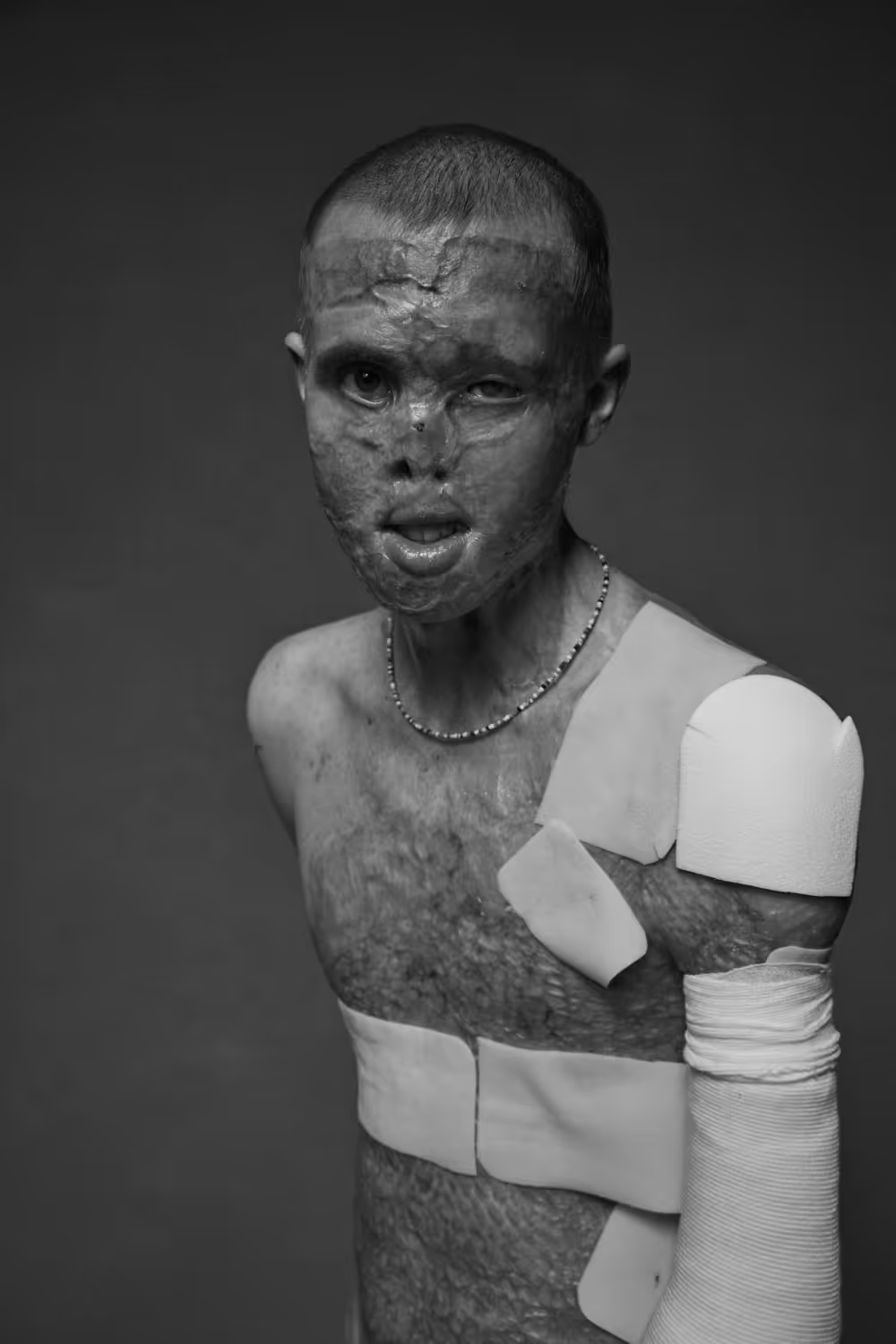
Countless times I’ve been told by doctors, therapists and specialists that I should stop hoping and accept the limits. At first, those moments broke me down but I’ve always found a way to gather myself and keep going. There’s real beauty in the small steps, in proving that impossible is just another word for something that hasn’t been achieved yet. I was told my left bicep muscle was gone forever, that I wouldn’t be able to train it. Today, I can do 50 pull-ups. My right arm is stronger, yes, but my left is growing every day. I was told an eye socket reconstruction couldn’t be done, until I found a surgeon who believes it can and I’m preparing for that operation (and the handful on my nose) with full optimism.
Leaving the rehabilitation centre and moving into my own apartment last October was hard. I knew that if I was going to give this new life a chance, I couldn’t hide away. It hadn’t occurred to me before but we see very few real life examples of badly burnt people. Early on in my recovery, I met the Swiss runner and athlete Philipp Bosshard who was also burnt in an accident and that was very helpful. When I went out, people were staring a lot; kids were asking their parents if I was a monster – and that happened daily. I realised that it wasn’t enough for me to accept how I look: I also had to help the people around me get used to seeing the scars, otherwise they would always be uncomfortable. It takes a lot of energy to do that but it’s the only way, and the process has made me stronger and more grounded.
Growth is not about rushing; it's about focusing on what really matters, even if the road is rocky.
In the beginning, I had nursing help every morning and evening but not for lunch or during the day. I had to learn to take care of myself and if it took half hour to peel an onion, I just had to get on with it. I quickly realised that becoming frustrated when the toothpaste lid falls to the floor five times isn’t going to help, and will only hurt my hands more. I had to stay calm, give it time and slowly but surely it got better. Society is obsessed with speed but for me, growth is not about rushing; it’s about focusing on what really matters, even if the road is rocky.
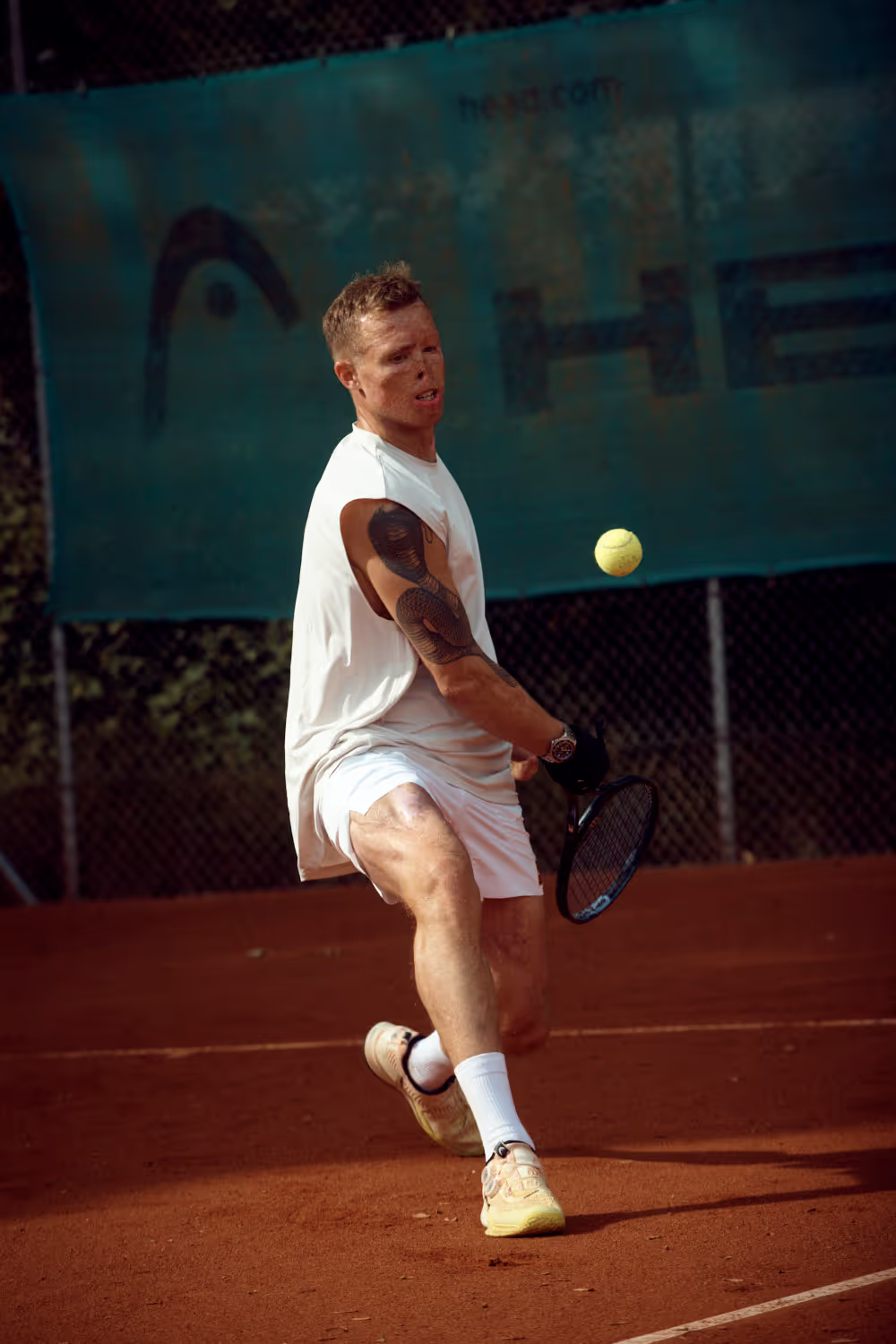
Over the past year I’ve been doing eight hours of therapy a day as well as cooking for up to four hours (making three times the mess I used to). I was told I’d never cook again, never fish, never snowboard, surf, swim, play tennis, drive a car. Now I do all those things, some of them even better than before. It didn’t happen overnight: I had to fail hundreds of times before the technique and strength came back. Some things worked with makeshift tools I’ve built myself using silicone and a 3D printer, others by finding a new way to do the same thing. The process has been made slower by prosthetics which are in development but stuck on software and hardware problems. But if I didn’t commit to this level of effort, my mobility, muscles, and nerves would decline. And I refuse to accept that. I want to be able with a capital A.
To just walk through the street or be able to do what I did before takes so much more courage with this new ‘cover’ of mine.
I think a lot about the future. Over a year ago, in my darkest moment, I met my life partner and she gives me great motivation. My chef background will always be part of me, but now it’s only one piece of the bigger picture. When my surgeries are done and I have functional prosthetics, I would love to rebuild my business – nutrition and health are huge interests of mine – but I have to figure out in what scale and capacity. The accident was a turning point, almost like a rebirth, and I’ve pushed myself to adapt. To just walk through the street or be able to do what I did before takes so much more courage with this new ‘cover’ of mine. Other people might put on a ‘cover’ to be more accepted in situations but for me it’s the opposite: I have to let my inner strength shine through.
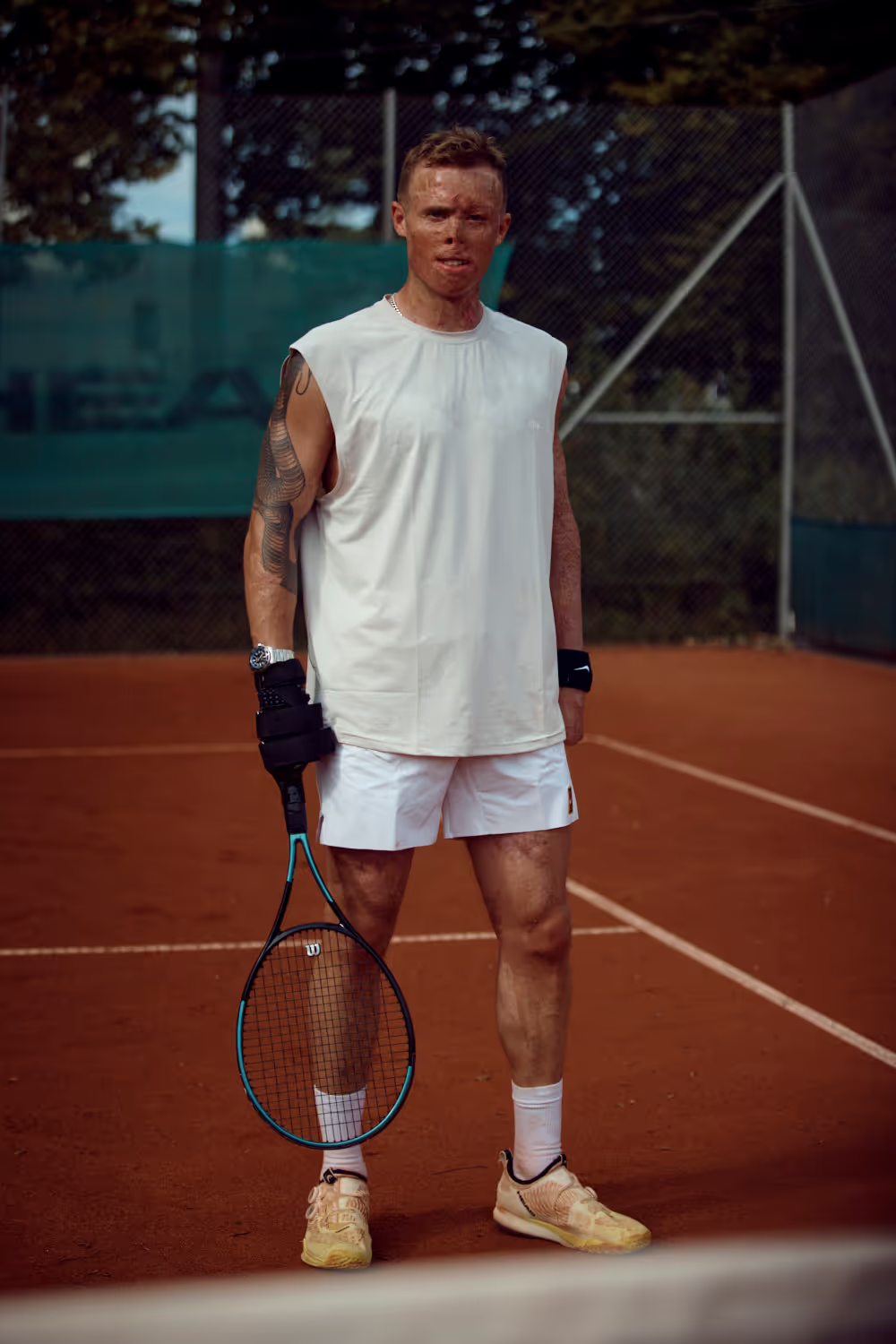
Marco Pierre White once said about Michelin stars: “The people giving out those stars have less knowledge than the individual behind the stove… What is a star worth, or two stars or three stars? They are worthless, because you are being given them by people who have less knowledge than yourself.” That resonates deeply with me. Very often, those who criticise or judge are not the ones who understand the hard work or the lived experience. Being different is not a weakness: it can become a strength. I’m not fully there yet, but I’m in the process of turning it into one.
Learn more about David at his website here
David Heimer
Chef