


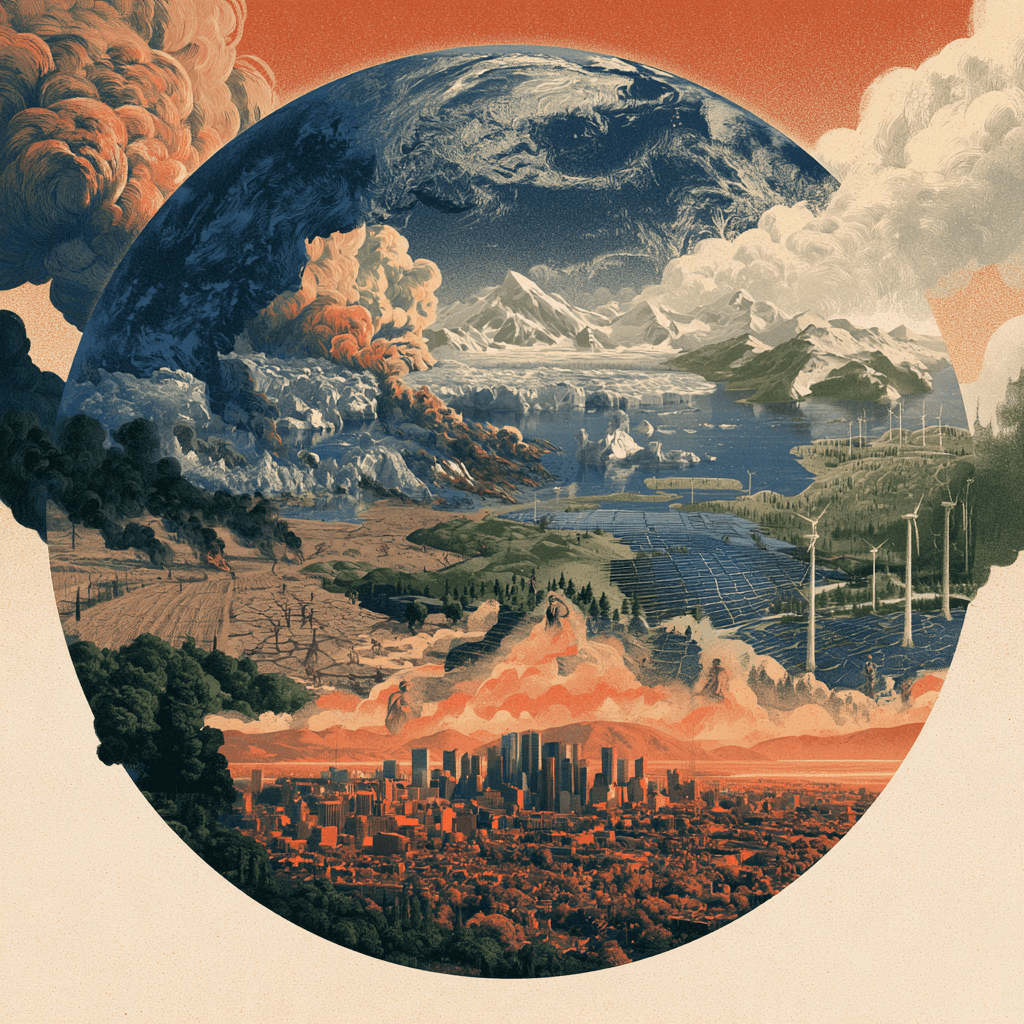
Following a summer of record-breaking temperatures across Europe, FOLIO speaks to Arthur Snell, author of Elemental: The New Geography of Climate Change and How We Survive It, on what lies ahead as the world continues to heat up.
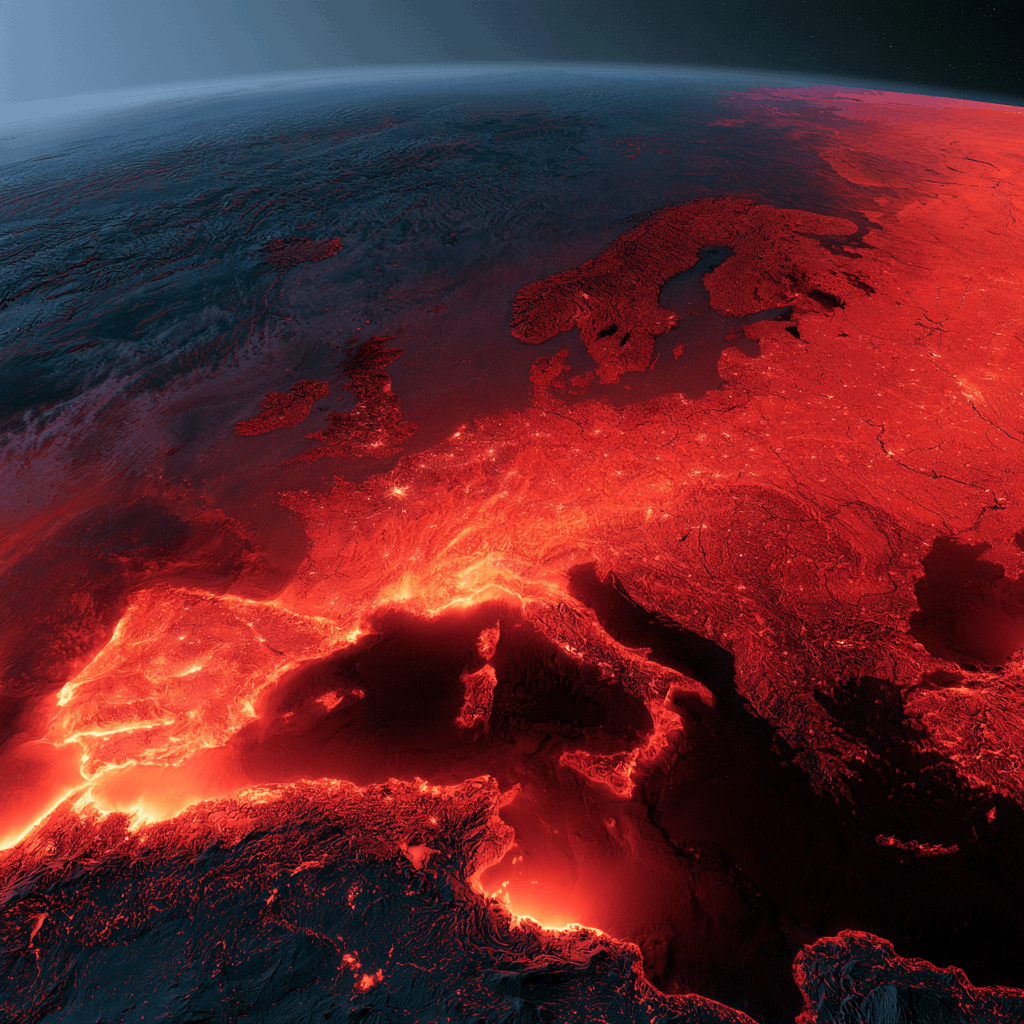
According to the UN Environment Programme, an average global temperature rise of around 3ºC by the end of this century would lead to billions of people experiencing lethal heat annually and nearly 100,000 heat-related deaths per year in Europe alone – a not unrealistic scenario considering there are already predictions of a 2ºC increase by 2050. The ramifications include widespread extinctions, severe food shortages and sea level rises. It’s just one of many stark facts set out in British former diplomat Arthur Snell’s book Elemental: The New Geography of Climate Change and How We Survive It, published earlier this year. “We’ve lived through this incredibly hot summer and already it feels as though the political conversation has moved on. There’s no urgency,” he says.
While the big picture is depressing because we’re doing it all too slowly, we are making changes
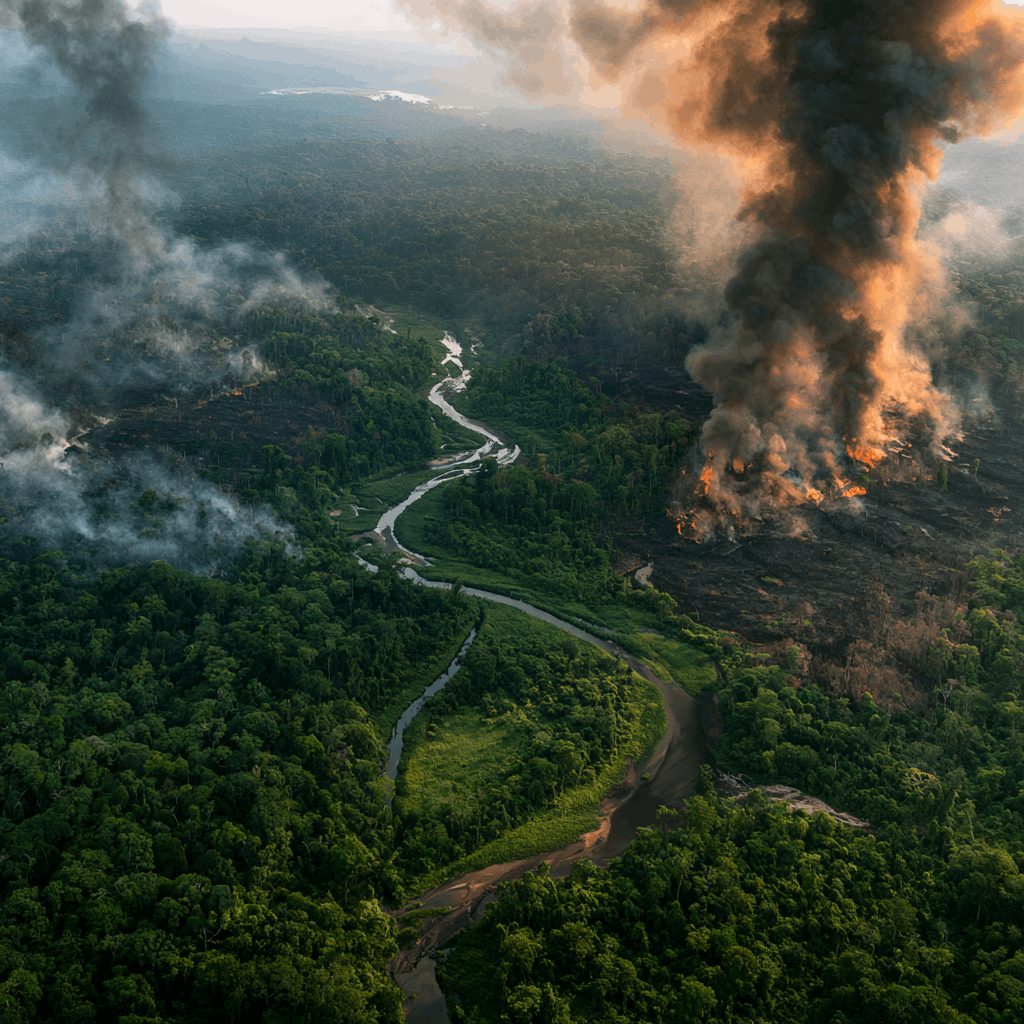
Whether discussing declining agricultural productivity in the Sahel (the African region which, the IPCC reports, is warming faster than almost anywhere else), escalating wildfires in the Congo and California, or the role of burning fossil fuels on the shifting international power hierarchy, Arthur’s underlying message is that human-induced climate change is reshaping our world in real time, rather than geological time – and it makes for mostly grim reading. However, he does also offer an alternative vision of the future. Yes, one with considerable climate change, major adaptations and disrupted economies but possible improvements within our reach too.
“While the big picture is depressing because we’re doing it all too slowly, we are making changes. There has been a rapid adoption of renewable energies and it’s growing all the time,” Arthur continues. “A great example is China which is a world leader in pioneering developments in EV and other battery technologies. What’s interesting is that the country has reached a point where its CO2 emissions are falling even though the economy is expanding. The US and the EU might have well-written documents on critical minerals strategy but China has gone out and done it. Partly being autocratic makes it easier but democracies recently are seen to have lost the ability we once had in terms of how to plan for the long term.”
In 2025, data from the World Bank showed that electricity from onshore wind and solar costs about a third as much to produce as that from coal. As the book details, the rise of EVs is expected to make a big hole in the global demand for oil in the 2030s, perhaps reducing it by as much as six million barrels per day (the equivalent to around 60 per cent of the Saudis’ entire production). We are also seeing large-scale concentrated solar power plants in Morocco such as Noor Ouarzazate which produces enough electricity from a single solar installation to meet the needs of two million Moroccans (negatives include the significant amounts of water it uses and the challenge of storage) and Xlinks, whose basic premise revolves around connecting centres of abundant supply to areas that need it, through a global grid of subsea intercontinental cables.
Then there’s hydrogen, which, if produced cleanly, could be one way to cut emissions on short-haul flights. A 2022 report by the consultancy McKinsey proposed a route to net-zero aviation by 2050, relying heavily on hydrogen and related technologies (although as Arthur points out, this would mean rethinking the entire logistics infrastructure for the industry). The European aerospace giant Airbus and Brazilian manufacturer Embraer both expect to have hydrogen powered aeroplanes in service by the mid-2030s.
As the world, once again too late, gets closer to managing the crisis of greenhouse gases, the importance of these forests cannot be overstated
Incidentally, he names Brazil, which sources 80 per cent of its electricity from clean energy and is one of the world’s leading producers of iron ore, as somewhere that could become a bigger player in the minerals arena. “It’s also an important agricultural producer. As the world, once again too late, gets closer to managing the crisis of greenhouse gases, the importance of these forests cannot be overstated.” Another country is Canada, which is “less affected by rising land heat but also has a wide number of minerals.”
Although there are obvious concerns relating to energy dependence on any one country, Arthur, who has spent a decades-long career working in the geopolitical space across Africa and the Middle East, believes the counter-argument to the friction this could cause is that trade between nations can also foster cooperation. “When we look at the major environmental issues that can drive conflict such as water, in many cases the opposite has happened and countries have been forced to work together. India and Pakistan rely on the same mega basin in the Indus River, for instance. It’s logical that they can’t risk destroying that partnership and making two billion people without water. And, as the Arctic warms, allowing new shipping routes to open up which Russia wants to control, and Chinese farming migrants move to Siberia when the permafrost melts, China and Russia will have a lot of benefits from collaborating.”
Migration, of course, is “a big part of the story as sparsely populated areas of the world such as deserts expand, and territories currently inhabited may become almost unliveable.” In some cases, such as the tiny archipelagic country of Tuvalu in the South Pacific this is due to rising ocean levels (in 2023, it signed the first bilateral agreement on climate mobility with Australia for the 11,000 citizens). In others, like East Africa and India, floods and droughts are causing crop failures, livestock losses and livelihoods to collapse. The World Food Programme estimates that more than 345 million people faced high levels of food insecurity in 2023, more than double the number in 2020.
“We can adapt rice so it does better with flooding and grows better in extreme heat,” says Arthur, citing Bangladesh’s national rice research institute which has developed varieties that can flourish even after spending weeks underwater. “In countries like the UK where summer now is what it was like in the south of France 15 years ago, it’s about changing the techniques we use and what we grow.” Other ideas explored in the book range from the extreme, such as geoengineering the weather, to mega-dams and expanding the R2P (responsibility to protect) concept to safeguard globally critical ecosystems like the Amazon. “There’s no silver bullet invention that we’re waiting for; many of the technologies have already been found and there are lots of reasons for optimism,” he concludes.
Elemental: The New Geography of Climate Change and How We Survive It (published by Hachette UK) is out now.
Arthur Snell