


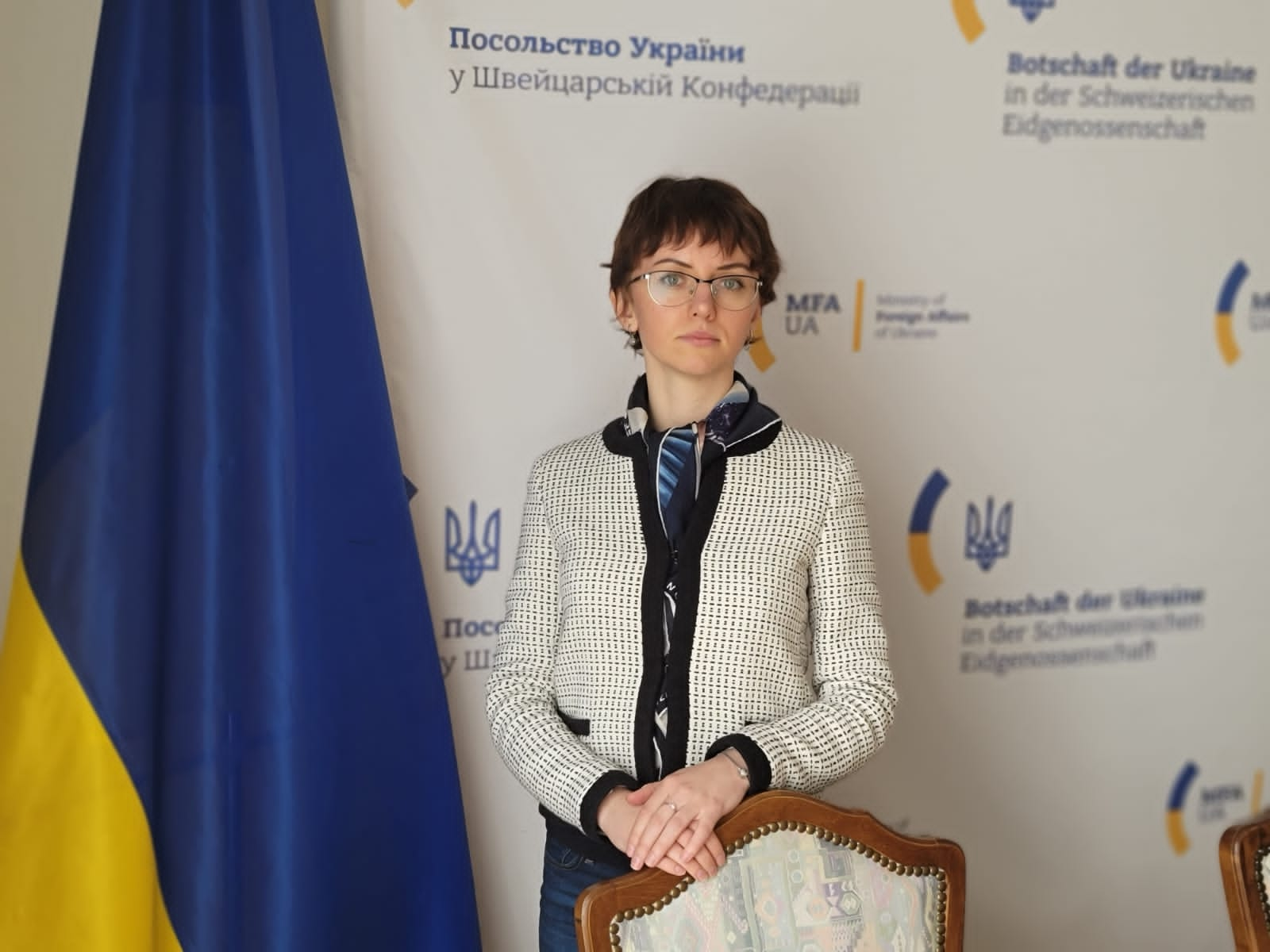
When Russia’s full-scale invasion of Ukraine began four years ago, education expert Jane Kaskova had to decide immediately whether to stay put or uproot her entire life. Here, she shares her family’s journey to Switzerland and what it takes to begin again.
Is the car filled with petrol? Have I got all our documents? What’s the best route to escape the city? When you’re going on vacation it's easy to plan. You follow a list: tick, tick, tick. The luggage is ready. Your documents organised. But when you need to pack up your whole life in 30 minutes without knowing how long you’ll be leaving home for, then it becomes very difficult. I consider myself a prepared person but among the chaos when the war started, it was almost impossible to make decisions quickly.
In early 2022, I thought that something might happen but I didn’t expect a full-scale invasion. My family and I – my husband Artem and our two children, Albert who is now nine, and Teia, almost six years old – split our time between homes in Kharkiv in the east and Irpin, near Kyiv. I ran my own English language school, Global English, in both places and my husband was head of the advisory team in the Ukraine parliament.
On 24th February, I was in Kharkiv and my husband was in Kyiv. I heard the first explosion at 5am, saw the flash and smoke in the sky, and understood immediately that we were under attack. The very first thing I did was call my husband, my parents and my closest friends. Before thinking about what to pack or where to go, I needed to know that the people I loved were alive and safe. After that, I put a few clothes and documents into the car. There was panic on the streets, a rush of people, the sound of screams.
Everyone was trying to escape at the same time, people were frightened and driving in panic, and I had to constantly manoeuvre through cars while trying to stay focused and keep my children safe.
I knew that to leave with two kids would be complicated. I needed someone who could take care of my daughter, who was only 16 months old, while I drove. I called my parents: my father insisted on staying to protect the city. I knew how dangerous it was, but I also respected his decision. There was no time to try to change his mind. My mum wanted to stay with my dad, but she agreed to come with me and help with the children. They couldn’t act quickly or gather their thoughts, and for me every extra minute we stayed felt like an eternity.
My husband and I had agreed that we would meet in Oleksandriia, but he told me not to stop at any point, under any circumstances. I knew I had to get us across the Dnieper bridge as soon as possible because if it was bombed, we would be trapped. I spent the next few days with no sleep, either in a traffic jam or speeding at 200km an hour. Everyone was trying to escape at the same time, people were frightened and driving in panic, and I had to constantly manoeuvre through cars while trying to stay focused and keep my children safe.
It was especially difficult at night, going through villages where there aren’t good roads. I was concentrating so much it felt like I had sand in my eyes. I was also afraid the whole time; planes were flying overhead and I didn’t know if they were Russian or Ukrainian. It was hard explaining to my son what was happening. He was asking the simplest questions: “Mum, will we come back home? Why did grandfather stay? Will I see dad? I can see that something bad is happening.” I didn’t know how to answer him because I didn’t know the answers myself. I remember deciding to tell him the bare truth, but in the simplest words a child could understand. I didn’t want to frighten him, but I also couldn’t promise him things I didn’t know would be true.
At one point I got lost and was driving in circles because the GPS stopped working. Teia had a temperature and I hadn’t had time to take her medicine from home so I was also thinking about where there might be a pharmacy. The ordinary things you rely on had suddenly disappeared. I had baby powder and milk, and basics like avocado and carrots for my son, which I grabbed out of the fridge at the last second before leaving. Those few things ended up being incredibly important – they meant my children had something to eat when almost everything around us was closed. Roads were blocked and the military were checking every car.
Once I met my husband, we hid in the forest for a couple of hours to make a plan, and to have our first real moment of rest after so many hours of driving. Then we went to Kamianka-Buzka where a friend had offered us a place to stay. In Ukraine, everyone knew that if there was an invasion, men wouldn’t be permitted to leave the country unless it was under special circumstances. One of those was having more than three kids and my husband has two other children from his first marriage so we thought that he would be allowed. But we were still uncertain until we reached the border.
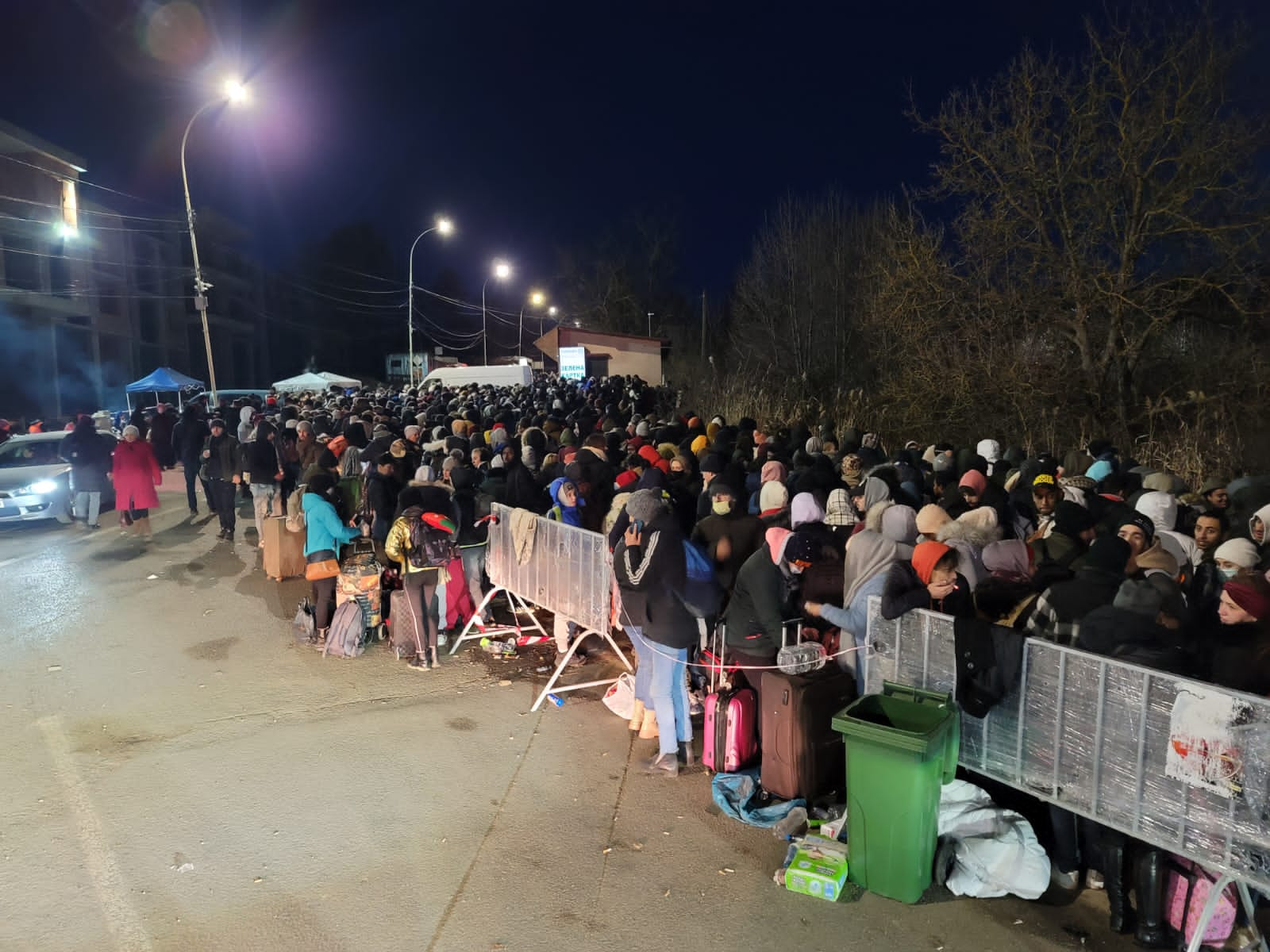
I kept thinking: what happens if they don’t let him leave? Do I continue alone with the children, or do I stay in Ukraine with him? It felt as though I was being torn in two – between keeping my family together and taking my children somewhere safe. Thank God, we were able to cross the border together. After that journey, I was so traumatised that I couldn’t drive for half a year.
We crossed into Poland and volunteers were waiting with hot soup, diapers, baby food and medicine. Whenever we stopped at a café to get something to eat, people refused to take our money. Everyone was shocked by what was happening in Ukraine. After a couple of days there, we carried on to another friend’s house in Bayreuth, Germany. It was an opportunity for us to rest but also a period of huge uncertainty. We didn’t know whether to start looking for jobs and a kindergarten, or if the war would be over in a couple of months. We thought other countries might intervene but nothing happened. Our hosts in Bayreuth brought us a basket with fresh bread every morning; small acts of kindness like this can make you feel human and cared for.
When we arrived in Switzerland, we were like kittens learning everything from scratch. Medical services, education, jobs, taxes: it was all totally different from our experience in Ukraine
We decided to move again, this time to Zurich, once Switzerland opened its borders to Ukrainians, because we thought there might be better job opportunities in a bigger city. Also, I had been before; I represented Ukraine in Davos, at the World Economic Forum in 2017. Through that, I was part of the Global Shapers community, a group of young leaders, and we all stayed in touch. I sent a message asking for advice and one of the members, Elena, invited us to stay. We’d never met before but it turned out that she was Ukrainian, from Kharkiv. Elena and her husband Simon welcomed our family, shared their home, their food. They even wrote little postcards for the kids. We were so touched by their gestures. They kept telling us, “You are not alone.” And they didn’t just say it: through everything they did for us, they made us believe it.
When we arrived in Switzerland, we were like kittens learning everything from scratch. Medical services, education, jobs, taxes: it was all totally different from our experience in Ukraine, and sometimes different even from what we had imagined life here would be like. Elena and Simon found us a home in Zollikon, which is a real community. I remember the day after we moved in it was raining heavily and some neighbours gave us wellington boots for the kids. Some people brought basic clothes for our whole family, others arrived with cake and offered to support us with whatever we needed. It made us feel like we weren’t alone and gave us strength.
For me, there has been a ripple effect: so many people helped us and I feel empowered to help others. My husband and I started volunteering, and we continue to support Ukraine and Kharkiv in different ways, organising parcels with food and essential supplies, as well as equipment and technology for educational purposes. When you have experienced the power of someone supporting you at the moment you need it most, you understand how important it is to pass that kindness on.
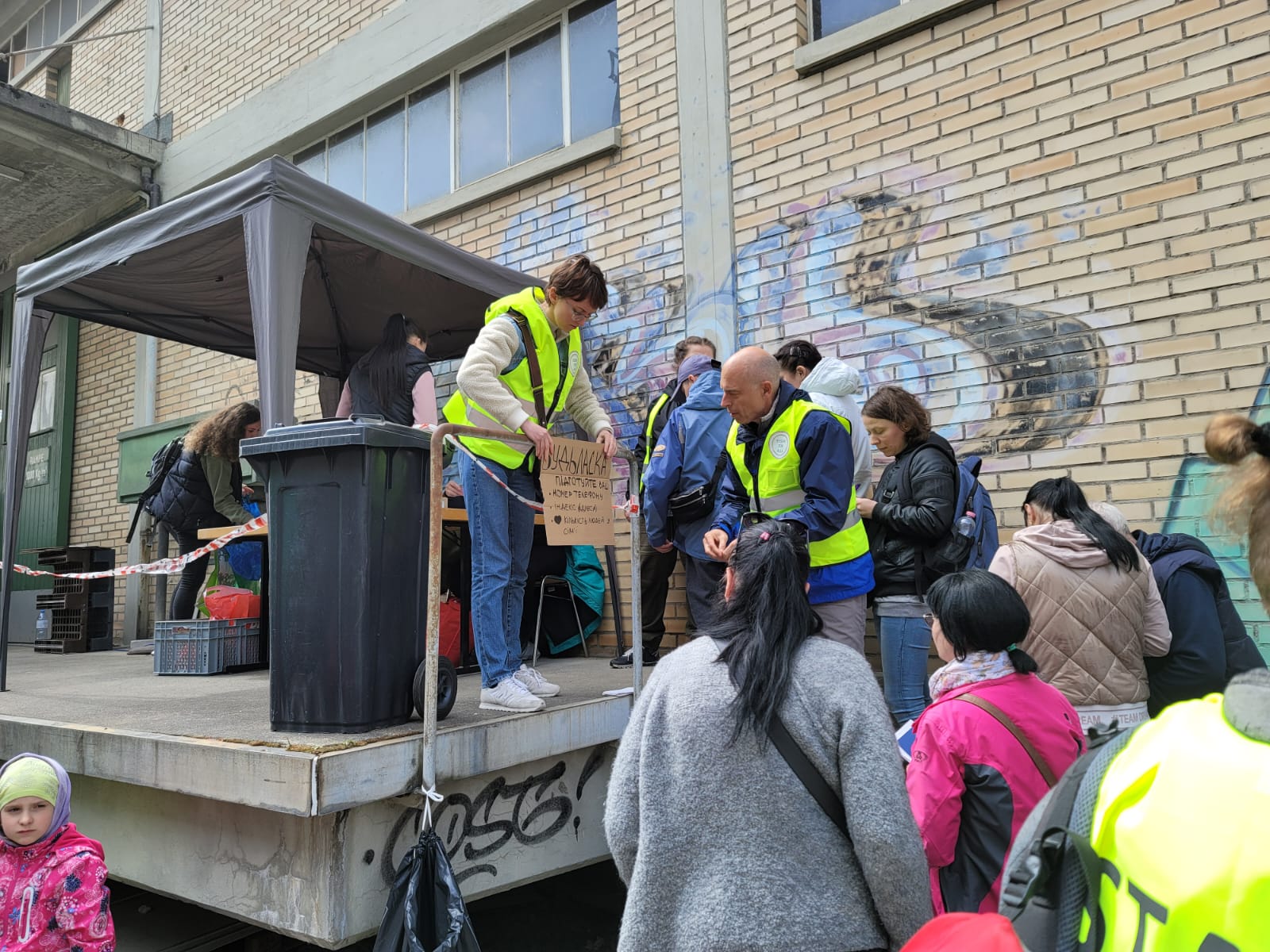
Last year, in 2025, together with Ukrainians living in Zollikon, we organised a large event at the Zollikon Museum called Together in Zollikon – Learning Where We Live. We wanted to thank the community and the families who had opened their homes and helped Ukrainians arriving here. We prepared Ukrainian dishes as a way of sharing our culture, our food and a part of ourselves.
For a long time, I had nightmares and we all found loud noises scary. The sound of a helicopter, or fireworks on Swiss National Day, made us feel like the terror and chaos was back even though we were safe. I never really had time to stop and process the trauma or work through it with professionals. Life kept moving and I had two young children who needed me. In many ways, they became my best medicine, together with the support of my family and the opportunity to start working again and rebuild a sense of normal life.
I work as a team leader at Swiss Exams, which is very similar to my role in Ukraine. I’ve also been given opportunities to develop and grow, which has helped me rebuild not just my professional life, but my confidence in the future. Finally, I feel settled and I like what I’m doing. I have friends, and co-workers who are also passionate about education.
Regarding my family, now my father has moved here and we all live together: my parents, my mother-in-law, my husband, our children and me, all in one house. Lots of people are surprised when they hear this but for me there is something very special about it. Sometimes I feel we are like a very big Italian family. My children are fortunate to grow up surrounded not only by their parents, but by their grandparents too. After everything that separated us and everything we have been through, being together under one roof gives us a sense of strength, belonging and stability that I don’t take for granted.
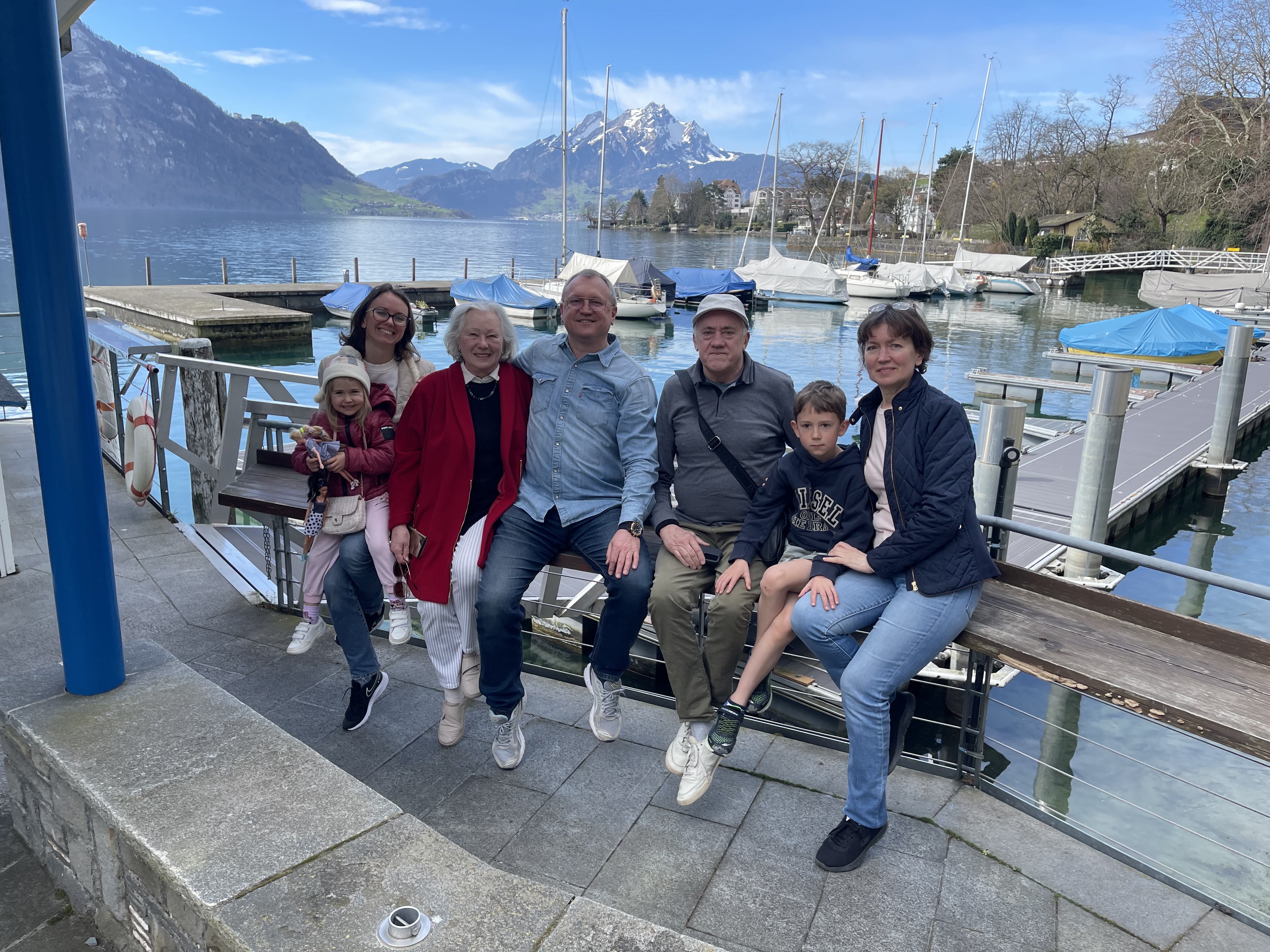
The war in Ukraine is like a never-ending story. It’s hard to say if we would ever move back. I’ve stopped planning long-term: now we live with what we have. Here in Zurich, people have supported us all the way and I’m very grateful for that, and for how welcome they have made us. It feels like home to me now. Sometimes the children come back from school with drawings where the Ukrainian and Swiss flags are side by side. For me, those pictures say more than words can. They are growing up carrying the country they came from while also loving the country that gave them safety.
We have many friends who are still in Ukraine and they, unfortunately, have a different reality. I don’t know how they manage to have the strength to live through it. Those who stayed in Ukraine are resilient and those who left are also resilient – it’s simply the only way to adapt and keep going. Perhaps resilience is not about leaving the past behind. It is about carrying everything you have lost and everything you love with you, while still finding the courage to build a life around hope. Ukraine will always be part of who we are, and Switzerland has shown us that sometimes home is also the place where, when your world falls apart, people open their doors and help you put it back together.
Jane Kaskova