


A world away from the influencer lifestyle that often goes hand-in-hand with five-star hotels, there are thrilling experiences to be had in less-explored corners of the globe – from private mobile camps in Socotra and Bhutan, to cycling holidays in the Turkish mountains, and trekking in the Himalayas.
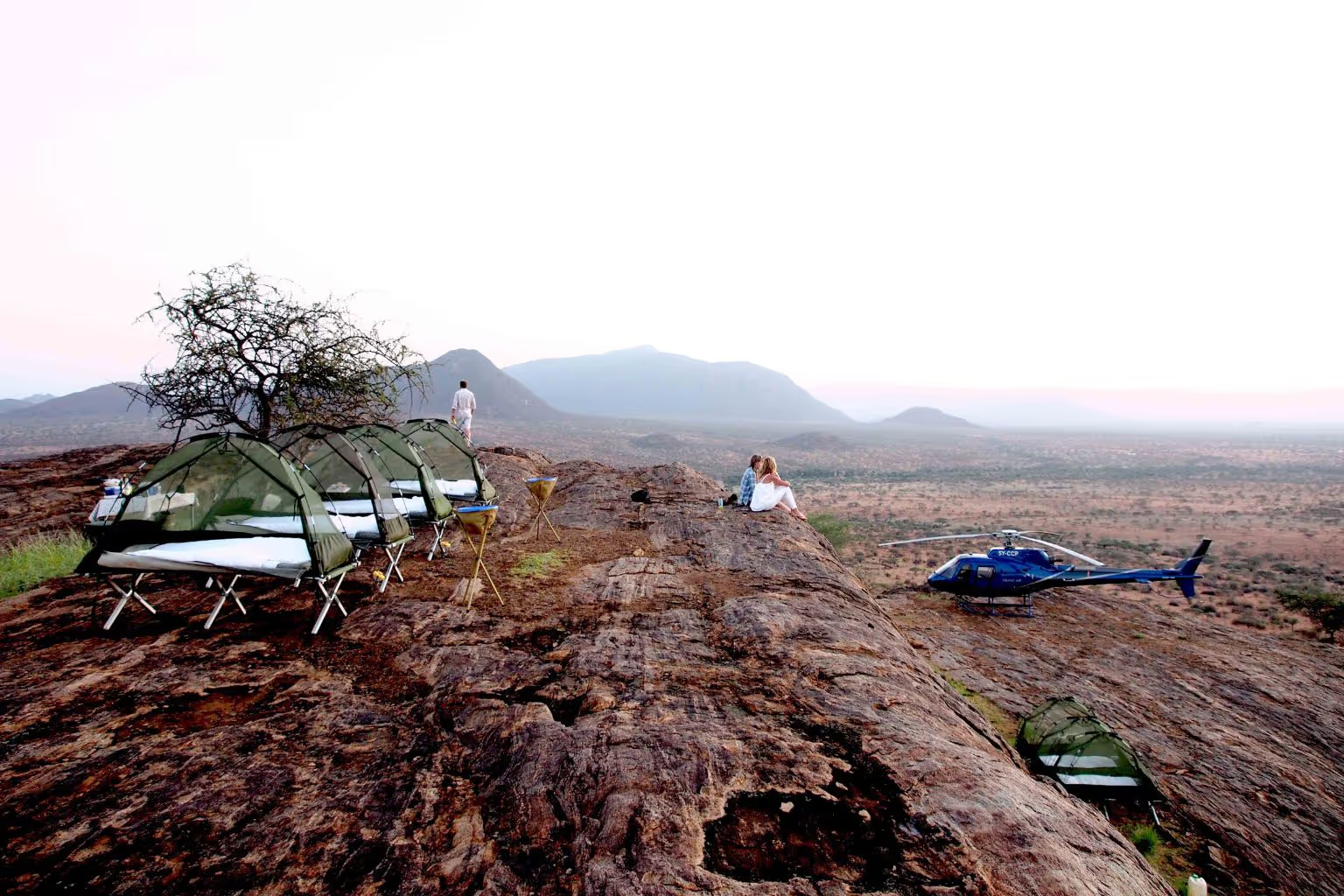
“To me, the combination of a mosquito net cot bed, a high calibre private guide and a helicopter that unlocks complicated terrain and logistics is the height of luxury; it’s two-star accommodation but a seven-star cerebral journey,” says Will Jones, founder and Chief Explorations Officer of tour operator Journeys by Design. The Africa-specialist’s offering includes ‘Rare, Off-The-Map’ expeditions to countries such as the Republic of Congo and Eritrea as well as lesser travelled parts of classic safari destinations like Kenya.
“There is more interest in off-grid landscapes and a larger appetite for the wild. I think, because by and large we are so protected from risk, that there is a market for those who are prepared to push the boundaries and comfort zones a little,” continues Will. He cites a Bedouin-style camp in northern Chad’s Ennedi desert; operating the only boat on the Omo River in southern Ethiopia where tobacco, coffee and fish hooks are traded with the Mursi and Kara tribes; and spending time with the endangered mandrills in Gabon’s Lope National Park, as examples of this.
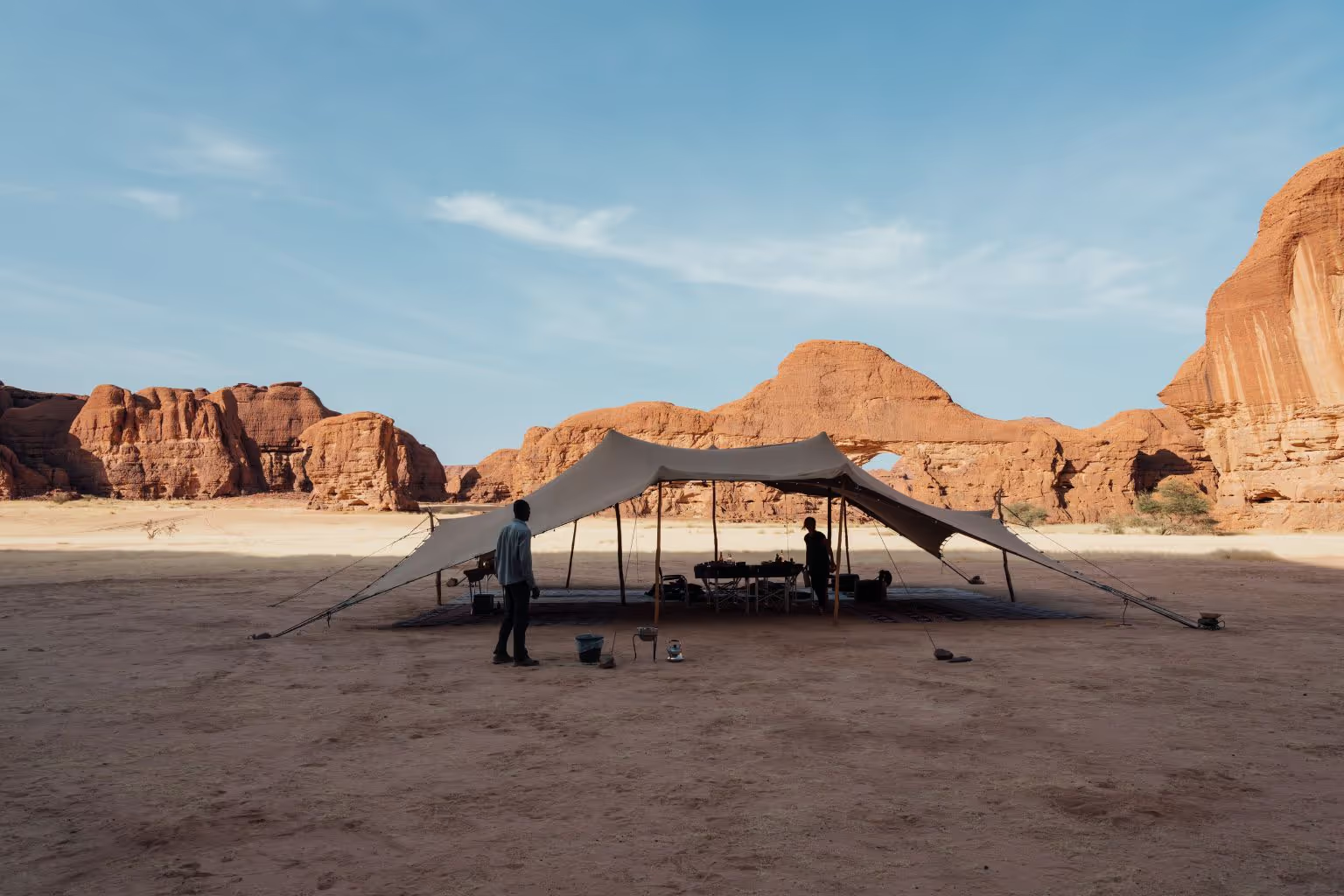
Someone else used to venturing into uncharted territory is Sean Nelson, founder of Socotra Island Expeditions and Oman Expeditions (he has been crafting bespoke trips in the latter country for nearly two decades). “Even quite recently we’ve seen an increased demand for people looking for immersive experiences rather than the homogenised hotel output. The trips we do are as comfortable as we can make them but they are definitely an adventure,” he says. “It’s about getting off the beaten track and into nature at its most elemental.”
Excursions could include being guided by conservationists and biologists to discover Socotra, one of the most biologically diverse places on the planet (“it’s refreshingly wild and woolly, with very little infrastructure; the antithesis of our modern, managed world,” explains Sean) or, in Oman, where he was recently the first to bring a mobile camp to the Musandam peninsula, diving and snorkelling in the fjord-like khors.
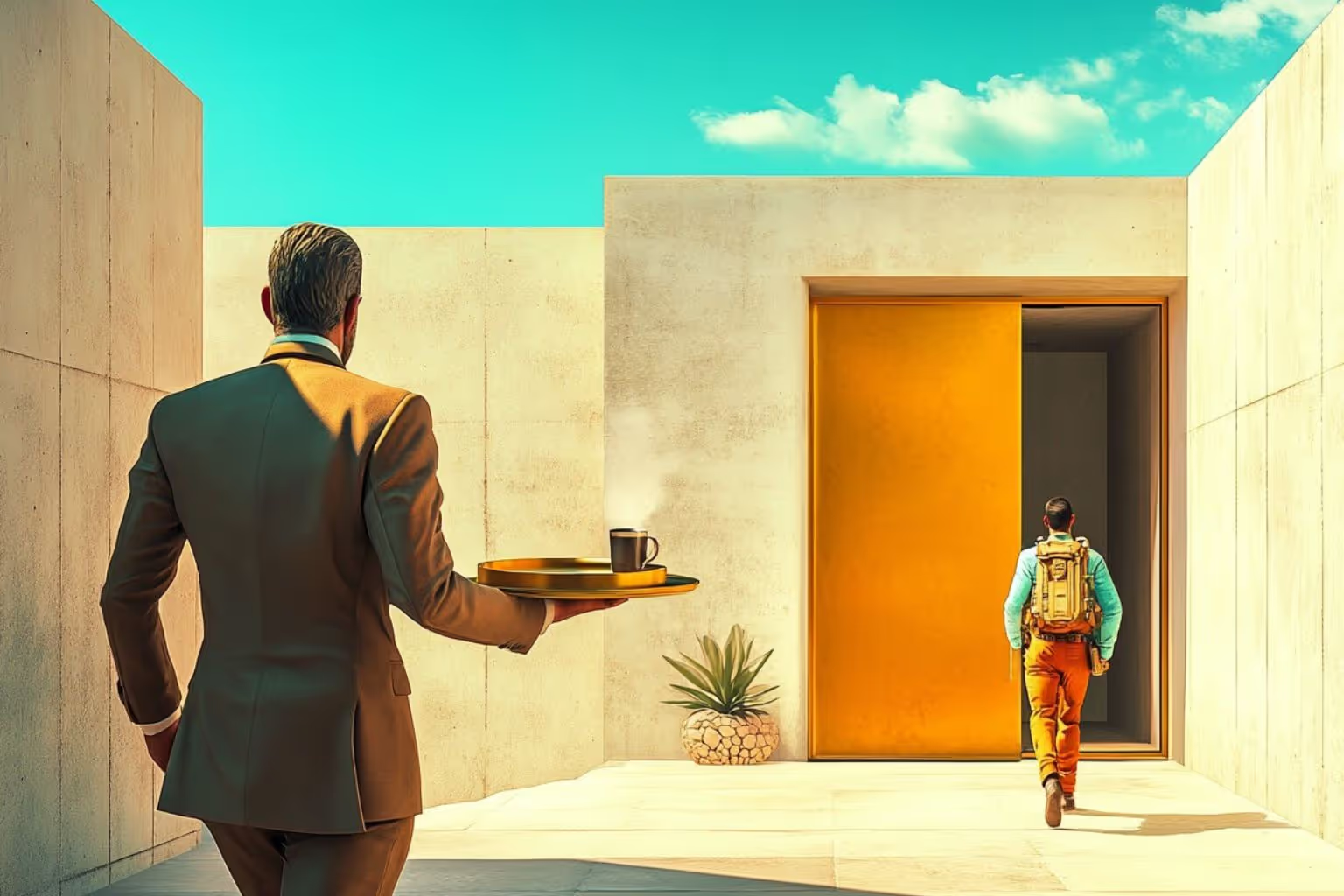
Elsewhere, Carolyn Addison, Head of Product at tour operator Black Tomato, has seen more requests for destinations such as Greenland and Mongolia. “Places we see growing are those that tend to be rustic and understated. It’s a different way of defining exclusivity; having an experience that few others will and certainly not at the same time as you,” she says. “There’s a shift away from gold taps and butler service to going back-to-basics somewhere with a real sense of location.” She namechecks the casitas at Sol Y Luna in Peru’s Sacred Valley and Hattvika Lodge, a series of fishermen’s cottages in the Lofoten Islands, as being booked by clients who prioritise authenticity over swanky marble spas.
Another expert with a knack for seeking out hidden nooks that others might overlook, is Alice Daunt, founder of Daunt Travel, who believes there is a heightening aversion to excess. “I do think that there is a move away from the constant grandeur and expense that goes hand in hand with over-tourism. Luxury now is being off-radar, staying somewhere like The Happy House in Nepal or Shakti Prana which opens later this year in the Himalayas. It’s low- impact, slow travel for those who want to be off their devices and walking in the mountains,” she says, putting Ultima Thule Lodge in Alaska in the same category. “It’s the big wild west; I didn’t see another road or house during five days of exploring. These are special places, with a kind of poetry that you rarely find in a Maldivian hotel.”
One country that has only been added to the tourist trail relatively recently is Bhutan, which opened its borders in the 1970s and ever since, has followed a sustainable high-value, low-impact model. “It’s my belief that one of the main reasons people visit Bhutan is to connect with places that remain pristine, both environmentally and culturally,” says Matthew DeSantis, founder of tour operator MyBhutan, who has been living in the Buddhist kingdom for 15 years. “We’ve seen, for example, Paro valley, grow over the last five years or so. With that has been strong interest from guests wanting to enter some of the deeper valleys where villages have remained true to their identity and you can feel the layers of ancient wisdoms. There are just 15 districts that remain completely untouched.”
Matthew’s expeditions typically involve staying in a mix of upscale properties, cottages an farmhouses, as well as his own tented Sangwa Camp (there are three locations away from the popular five valleys network, in Haa, Tsirang and Gasa). “A lot of my first years in the country, I spent doing six week-long trips with friends, crossing jungles and forests, and camping. That feeling of being among these unique natural habitats can be lost when people spend the entirety of their time at big-brand hotels,” he continues.

Of course, there’s no need to fly long-haul to escape Instagram-snapping influencers at a fancy hotel bar or crowds with selfie-sticks vying for the best sunset view. A decade ago, Oli Broom founded The Slow Cyclist to offer small group walking and cycling holidays in remote parts of places such as Greece, Poland, Transylvania and Spain’s Basque country (mostly they are privately organised for families or friends travelling together; and always using electric bikes). “Even destinations that are more familiar, we cover in our own way,” says Oli, who has recently launched a new route through the Armenian Highlands. Days often include cultural stops, before guests’ bed down at small, locally owned guesthouses. “Sometimes we arrange house stays that aren’t generally open to tourism, by which I don’t mean an amazing private villa. It might be literally the only place to stay."
For all these journeys, a major part of the appeal is wanting to be somewhere extraordinary, on your own. “On the holidays we run in the Taurus Mountains in Turkey, the nights that everyone tends to rave about are the two spent sleeping under the stars. Admittedly it’s a private tented camp but other than solar powered loos and showers it’s pretty simple,” he concludes. “Coming over a hill in a forest and finding a picnic table laid with a meal home cooked by someone from the village or enjoying an epic landscape with friends and having it to yourself – that’s what many people consider to be luxury.”
Title photograph by Tropic Air from Journeys by Design.
Journeys by Design
Socotra Island Expeditions
Oman Expeditions
Black Tomato
Daunt Travel
MyBhutan
The Slow Cyclist